Human Laws versus Laws of Nature
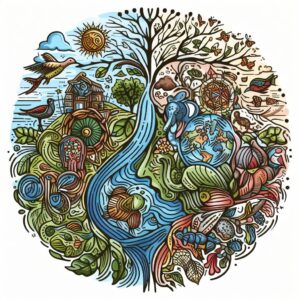
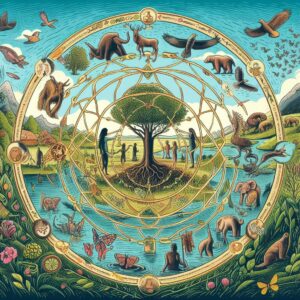
In this grand embroidery of existence, where the cosmos dances to the tunes of change and uncertainty, one immutable truth stands tall: the eternal nature of natural laws. Despite the diverse opinions of scientists, there is a unanimous consensus on this fundamental principle. The laws that govern the universe are steadfast, unyielding to the whims of time and space. This universal constancy is the bedrock upon which the edifice of science stands. The chemical composition of water, the geometric precision of a triangle—these laws have remained unaltered through millennia, transcending the boundaries of geography and history.
Yet, amidst this cosmic order, there exists a complexity unique to human consciousness. The human mind, a blend of objectivity and subjectivity, is a metaphysical entity, that delving into the realms beyond the physical. Life, intertwined with the laws of biology, psychology, and sociology, is a puzzle that defies the simplicity of scientific laws governing the inanimate. Human existence, with its ethical, aesthetic, religious, and social dimensions, eludes the rigid frameworks of physics and chemistry.
The relationship between human laws and the laws of nature is complicated, mirroring the intricate dance between the rider and the horse. Human laws, the edicts forged by human intellect, are attempts to synchronize human will with the natural order. Yet, in this endeavour, man grapples with the limitations of his understanding. The laws created by humanity are not infallible; they fluctuate with human insight and foresight. They are subject to change, reflective of the evolving human comprehension of the world.
The human brain, a non-material entity in its most profound form, navigates the complexities of existence. It orchestrates the delicate balance between adapting to nature and shaping it to its needs. Human laws, therefore, become the tools by which this delicate equilibrium is maintained. However, these laws are not inscribed in the fabric of the universe like the laws of nature; they are products of human endeavour, shaped by the collective will of societies.
In contemplating the interplay between human laws and the laws of nature, the enigma of free will emerges. Man’s freedom enables him to act, to choose, and to mold his destiny. Simultaneously, man is finite, confined within the boundaries of his understanding. The amalgamation of these traits creates a dynamic tension—a struggle to comprehend the world, to adjust to nature, and to harmonize individual and collective aspirations.
| Aspect | Human Laws | Laws of Nature |
| Eternality | Not eternal, subject to change over time | Eternal, unchanging, unaffected by time |
| Origin | Created by humans for societal order | Inherent in the universe, not created |
| Universality | Subjective, varies across cultures/societies | Universal, applies uniformly everywhere |
| Flexibility | Flexible, adaptable, can change with societal needs | Fixed, constant, and unalterable over time |
| Coordination | Aim to coordinate human actions with natural laws | Inherent coordination within natural processes |
| Scope | Limited to human societies and interactions | Encompasses all natural phenomena and substances |
| Subjectivity | Reflect societal norms, values, and perceptions | Independent of human perception, objective truths |
| Changeability | Changeable, influenced by evolving human understanding | Immutable, not influenced by human perception |
| Purpose | Serve societal order, balance individual freedom and societal harmony | Govern natural processes, provide framework for scientific understanding |
This table summarizes the distinctions between Human Laws and Laws of Nature based on the original write-up.
Religion, in this context, becomes a manifestation of this intricate relationship. It is the endeavour of living beings, akin to a plant growing with the help of a gardener. The coordination of the living being with the laws of nature, an organic and symbiotic relationship, constitutes the essence of true religion. Human laws, as the guidelines born from this coordination, reflect the ever-changing nature of human understanding and societal needs.
In the grand narrative of existence, human laws stand as a testament to humanity’s quest for equilibrium, understanding, and progress. As humanity strives to synchronize its will with the laws of nature, the evolution of human laws becomes a profound saga of adaptation, learning, and growth. It is a testament to the ceaseless endeavour of the human spirit—an ongoing odyssey to unravel the mysteries of the universe, harmonize with the natural order and carve a path towards a more enlightened future.
P.S.
Natural law refers to the eternal, unchanging, and fundamental laws that govern the universe. These laws are consistent and constant, transcending the constraints of time and space. They dictate the chemical composition of substances, the geometric properties of shapes, and other inherent characteristics of the natural world. Natural laws are universal truths that remain unaffected by human perception or understanding. They are the foundational principles upon which scientific knowledge is built, providing a framework for understanding the physical and biological phenomena in the universe.
Human law pertains to the laws created by humans for themselves or others over time. Unlike natural laws, human laws are not eternal or unchangeable. They are shaped by human intellect, reflecting societal norms, values, and needs. These laws are subjective, varying from one culture, era, or society to another. Human laws are attempts made by societies to coordinate human actions with the laws of nature. They are tools crafted to maintain a delicate balance between individual freedom, societal order, and the ever-changing understanding of the world. Human laws are a manifestation of humanity’s effort to adapt to and harmonize with the natural order, reflecting the evolving nature of human consciousness and societal dynamics.