Saturnalia, Sol Invictus, and the Curious Case of Christmas: A Dive into December Festivities (Updated with Historical and Astronomical Insights)
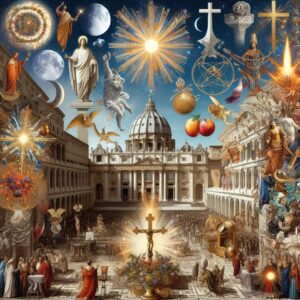
Greetings, fellow history enthusiasts! As the festive season descends upon us, laden with twinkling lights, delectable treats, and the joyous spirit of giving, I want to delve into a fascinating historical tapestry woven around December celebrations. Buckle up, for we’re embarking on a journey that spans continents, crosses centuries, and unravels the intriguing origins of Christmas, with a touch of celestial intrigue!
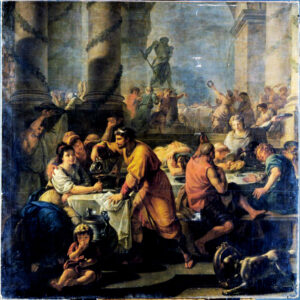
Photo Credit: Saturnalia by Antoine Callet
Saturnalia: A Riotous Roman Revelry
Our story begins in ancient Rome, where December wasn’t just about cozy fireplaces and carols. From December 17th to 23rd, the city erupted in a riotous festival called Saturnalia. While tradition places Jesus’ birthday on December 25th, historical and biblical scholars acknowledge that the exact date remains unknown. In fact, it wasn’t until the 4th century after Christ that December 25th began to be celebrated as Christmas.
Interestingly, this date coincided with the pagan festival celebrating the winter solstice and the birth of the sun god, marking the lengthening of days and symbolizing the triumph of light over darkness. In Rome, this festival was called Saturnalia, a time of revelry, liberation, and social inversion.
Sol Invictus: The Sun God Takes Center Stage
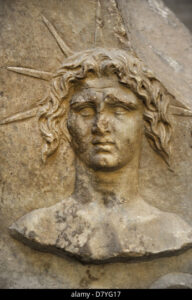
As the Roman Empire embraced Christianity, a new player entered the December scene: Sol Invictus, the Roman Sun God. Emperor Aurelian established December 25th as his official birthday, aligning it with the winter solstice and imbuing it with potent solar symbolism. This resonated with the Christian concept of Jesus as the “Light of the World,” paving the way for the eventual association of December 25th with Christ’s birth.
Uttarayana: Echoes of the Sun’s Journey in India
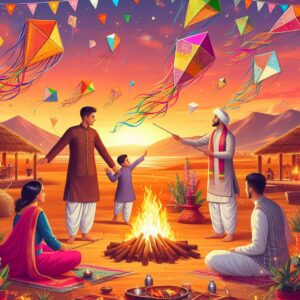
But our story doesn’t end in Rome. Across the vast expanse, in the vibrant tapestry of Indian culture, we find a fascinating parallel in the festival of Uttarayana. Celebrated on Makar Sankranti, it marks the sun’s northward journey, signifying the lengthening of days and the triumph of light over darkness. Bonfires crackle, kites soar into the azure sky, and families gather to celebrate the abundance of the harvest. The symbolism of the sun’s victory over darkness resonates deeply with the Christian narrative of Christmas, offering a glimpse into the shared human experience of seeking hope and renewal during the darkest time of year.
Celestial Clues: Unveiling the Heavens
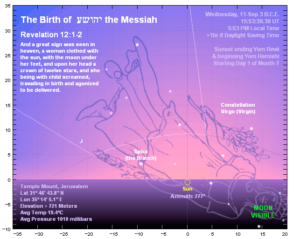
Adding another layer to this intricate story, some scholars point to intriguing astronomical clues that might align with Jesus’ birth. The Greek word for “wonder” in Luke 2:12 can be interpreted as “sign,” and some believe there could be celestial markers associated with Mary’s pregnancy. The signs of the Zodiac were originally not used in astrology but held symbolic meaning. Notably, the constellation Virgo in Revelation 12 is associated with Mary and motherhood, and on September 11, 3 B.C., the sun and moon were both positioned in Virgo. This date also coincides with Tishri 1 on the Jewish Calendar, the first day of the Feast of Trumpets, further adding to the potential significance.
Additionally, September 11th, 3 B.C., witnessed a rare astrological event: a close conjunction of Jupiter and Regulus, the “king star,” before dawn. Jupiter and Venus were also positioned within Leo, the sign of Judah, the lineage from which the Messiah was prophesied to come. Interestingly, the New Moon occurred on September 11th, representing the Jewish New Year, and Jupiter’s position over Regulus over an eight-month period mirrored a “crowning effect” in the heavens.

A Tapestry of Traditions, Woven Through Time
While the exact date of Jesus’ birth remains a mystery, December 25th has become deeply entwined with the celebration of Christmas. The echoes of pagan traditions like Saturnalia and Sol Invictus, interwoven with Christian symbolism and intriguing astronomical alignments, contribute to the rich tapestry of this festive season.
So, as we raise a toast to Christmas this year, let us remember the fascinating past, filled with astronomical possibilities and cultural crossroads. Let the twinkling lights be a reminder of the sun’s inevitable return, and let the shared laughter and feasting be a testament to the enduring power of tradition woven through time and across cultures.
May this festive season be filled with light, joy, and a sense of wonder as we explore the stories, traditions, and mysteries that illuminate the December skies.
P.S. This blog is just a starting point. Feel free to explore further! Delve into the fascinating history of Saturnalia, research the symbolism of Sol Invictus, or discover the regional variations of Makar Sankranti. The more we learn, the richer our understanding.
Happy Holidays!