The Journey Within – Part 1: Exploring the Layers of the Self
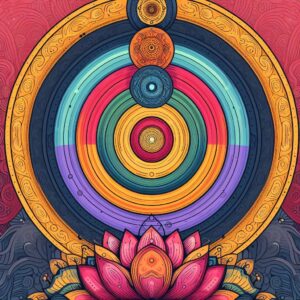
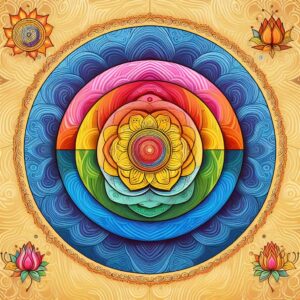
In the intricate tapestry of our existence, there lies a profound truth – our being is not merely confined to our physical form but extends far beyond, delving into the realms of subtlety and causality.
In Hindu philosophy, the concepts of Sthool Sharir (The Physical Body), Sukshm Sharir (The Subtle Body or The Nervauric Body), and Karan Sharir (The Causal Body). References to these concepts can be found in ancient Hindu texts such as the Upanishads, Vedas, Bhagavad Gita, and various philosophical texts from different schools of thought within Hinduism. Each school of thought might interpret and elaborate on these concepts differently based on specific scriptures and traditions being followed.
Much like safeguarding our physical health, it is important to protect and nurture these ethereal aspects of our being.
- Physical Body (स्थूल शरीर):
Our physical body, a marvel of nature, is a complex composition of sensory (eye, ear, tongue, nose, skin) and action organs (speech, hand, foot, reproductive organ, excretory organ), intertwined five elements (earth, fire, water, air, space). It is the vessel through which we perceive the world, a dwelling place for the Atman (soul). The physical body is lifeless if there is no Atma in it. But beyond its tangible existence lies the subtle body, an intangible essence that transcends the physical.
- The Subtle Body (सूक्ष्म शरीर):
Nestled within the physical, the subtle body embodies our intellect, ego, and mind. The subtle body consists of a life force (prana) that divides into five “Vayus” (vital airs), channelled through the energy centres or ‘Panchakoshas’ (five sheaths) identified as Annamaya Kosha (food sheath), Pranamaya Kosha (energy sheath), Manomaya Kosha (mind sheath), Vijnanamaya Kosha (wisdom sheath), and Anandamaya Kosha (bliss sheath). Check the table and an illustration below.
EACH VAYU GOVERNS DIFFERENT FUNCTIONS AND ASPECTS OF BEING
| Vayu | Area of Body | Function |
| Prana | Chest, Head | Governs intake, inspiration, propulsion, forward momentum |
| Apana | Pelvis | Governs elimination, downward and outward movement |
| Samana | Navel | Governs assimilation, discernment, inner absorption, consolidation |
| Udana | Throat | Governs growth, speech, expression, ascension, upward movement |
| Vyana | Whole body | Governs circulation on all levels, expansiveness, pervasiveness |
| Kosha (Sheath) | Function | Associated Aspect |
| Annamaya Kosha (अन्नमय कोश) | Physical Body | Food and Nourishment |
| Pranamaya Kosha (प्राणमय कोश) | Vital Energy | Breath and Life Energy |
| Manomaya Kosha (मनोमय कोश) | Mind | Thoughts and Emotions |
| Vijnanamaya Kosha (विज्ञानमय कोश) | Intellect or Wisdom | Knowledge and Discrimination |
| Anandamaya Kosha (आनंदमय कोश) | Bliss or Spiritual Core | Innermost Joy and Contentment |
This subtle form, imperceptible to ordinary eyes, is the seat of our deeper consciousness. Yogis, through dedicated practice, traverse beyond the subtle, touching the very essence of their existence – the soul.
- The Causal Body (कारण शरीर):
For those enriched with noble intentions and profound devotion, the causal body flourishes. Divine glories from liberation and peace to self-realization and vision of Ishwar (God) are all depend on the capability of this causal body. It contains the impressions of the Atma, feelings, thoughts, desires, tendencies, wishes, experiences, and knowledge in the form of seeds. It also collects thoughts, feelings and memories in the form of seeds. This ethereal repository shapes our spiritual journey, leading us from one life to another. In the pursuit of मोक्ष or Moksha (liberation), the causal body dissolves, merging the soul into the cosmic expanse.
Moksha (liberation): At the time of Moksha, even the physical, subtle and causal bodies fall. Then, there is no birth (avatar) of the Atma. Then, that Atma merges into the cosmic being.
The Journey Within:
To truly understand the self is to embark on an odyssey through these layers – physical, subtle, and causal. Ordinary perception can only grasp the surface, but through yogic insight and deep meditation, one can unravel the intricate tapestry of one’s existence. In the ultimate state of Samadhi, beyond the realms of meditation and yoga, the Atma meets its divine source, transcending the boundaries of birth and death.
Conclusion:
In the grandeur of our existence, our physical form is but a fraction of our being. As we delve into the subtleties of our consciousness and fathom the depths of our Atma (soul), we unveil the profound interconnectedness of all existence. It is in this exploration, this intimate journey within, that we discover the timeless wisdom of our existence, transcending the mortal coil and touching the infinite.