The Silent Siege: Israel’s Mastery of 21st Century Warfare

In the shadowy realm where technology meets warfare, a new era has dawned. Israel, a nation forged in conflict, has unveiled a startling array of cyber and covert capabilities that have left the world both awestruck and uneasy. As we stand on the precipice of a new age in military strategy, one question looms large: Is this the future of warfare, and are we prepared for its consequences?
The Invisible Battlefield
In a series of audacious operations that seem plucked from the pages of a techno-thriller, Israel has demonstrated its unparalleled mastery over the invisible threads that connect our modern world. The events of the past weeks read like a chronicle of precision and devastation:
- On a Tuesday afternoon at 3:25 PM, thousands of pagers held by Hezbollah activists across Lebanon and Syria exploded simultaneously. The blast killed twelve and injured some 2,800, including the Iranian ambassador to Beirut.
- Before the dust could settle, another shock wave hit the next day. This time, walkie-talkies became instruments of destruction, claiming 20 more Hezbollah operatives and injuring 450 others.
With tactical communications in disarray, the Israeli Air Force struck. A surgical bombing campaign put thousands of Hezbollah rocket launchers out of commission. In a targeted strike, Senior Hezbollah commander Ibrahim Aqil and 12 others were eliminated, dealing a severe blow to the organization’s leadership.
These are not flights of fancy, but the new reality of warfare as crafted by Israeli strategists. Imagine thousands of pagers, once thought to be secure lifelines, transformed into deadly explosives at the touch of a button. Picture walkie-talkies, the backbone of tactical communications, betraying their users in a symphony of destruction.
Beyond the Digital: Echoes of Entebbe
But Israel’s reach extends far beyond explosive devices and digital sabotage. In an operation that harkens back to the legendary 1976 Entebbe raid, Israeli special forces conducted a daring incursion into Syrian territory. Their target: a mountain compound near the city of Masyaf, allegedly used by Iran to manufacture missiles and rockets for Hezbollah.
In a scene reminiscent of Hollywood’s most thrilling action sequences, commandos fast-roped from hovering helicopters into hostile territory. They swiftly accomplished their mission before vanishing into the night, leaving behind a crippled weapons facility and a stark message about Israel’s reach and resolve.
The Entebbe operation, etched in the annals of military history, saw Israeli commandos rescue over 200 hostages from a hijacked aircraft in Uganda. Today’s operations, while different in nature, carry the same bold signature of Israeli military prowess.
The Art of Deception
At the heart of Israel’s strategy lies a web of deception so intricate it challenges our very understanding of global supply chains. How did Hezbollah, a group known for its caution, find itself armed with weapons of its own destruction? The answer lies in Israel’s infiltration of the very systems designed to supply its enemies. Through a network of phantom companies and covert operatives, Israel has turned the tables on its adversaries, weaponizing trust itself.
Beyond the Horizon
As we marvel at these feats of military and technological prowess, we must also grapple with their implications. In a world where cellphones can become assassins and trusted equipment harbors hidden dangers, how can any nation truly secure its communications? The lessons of Israel’s operations reverberate far beyond the Middle East, offering both inspiration and caution to powers around the globe.
A New World Order
China, with its vast manufacturing capabilities and global reach, stands poised to leverage similar tactics on an unprecedented scale. From Africa to Asia, Chinese-built infrastructure and donated technology could serve as Trojan horses, waiting for the moment to be activated. As nations rush to modernize, are they inadvertently laying the groundwork for their own vulnerability?
The Road Ahead
As we stand at this crossroads, the choices we make will shape the nature of conflict for generations to come. Israel’s recent operations serve not just as a demonstration of power, but as a stark warning of the challenges that lie ahead. In a world where the lines between peace and war, ally and enemy, tool and weapon have blurred beyond recognition, how will we navigate the treacherous waters of global security?
The silent siege has begun. The question is, are we listening?
Confessions of a Lifelong Reader: Lessons Learned, Lost and Regained

I still remember the moment I learned to read. I was six years old (I guess). The first word was “Apple”
From that moment on, I read everything I could get my hands on. I devoured biscuit box descriptions, every billboard on the roads & streets, the newspaper, and grocery store leaflets. I read Amar Chitra Katha, which gave me ancient wisdom; Adventures of Tintin whisked me on globe-trotting escapades; Archie’s gang made me fantasize about life in this wonderland, and The Hardy Boys ignited my inner sleuth.
Soon, I graduated to Enid Blyton’s adventure series, Agatha Christie’s thrilling whodunits, and Fredrick Forsyth’s heart-stopping spy novels. Robert Ludlum and Jeffrey Archer inspired and brought the writer out of me. Even classics like Charles Dickens and Jane Austen found a welcome spot in my heart.

My reading spree lasted until my teenage years and late 20s. Then – and (I think) you can relate to this – I started being interested in other things. Drinks, Smoking, Video games and Hanging out with friends in Irani cafes.
By the time I graduated, I had barely read anything.
To this day, I wish I could go back to that time—those first, unburdened years of reading. Life was easy, and I had all the time in the world.
However, my early employment days showed me a new perspective on reading: People read non-fiction too. They read to learn, to advance their careers, and to build a better life.
The new purpose of reading was exciting, but now, I felt doubly bad for not doing it: Not only did I lack time to read for leisure, but I also wasn’t doing my future self any favours. Ugh.
While I was working as a news reporter, I finally managed to carve out some time. I built a regular reading habit again, and for a while, I read one non-fiction book every week. I was so proud, but then…
One day, I picked up the next book, and I realized: “I don’t want to read this!” Do you know why? It wasn’t because the book was not interesting.
It was because I had neither processed nor implemented what I had read the week earlier. I felt overwhelmed with information and was not satisfied with action.
That’s when I finally stopped envying Warren Buffett who famously claims his only job is to read 8 hours a day (8 hours of reading a day? Clearly, the man doesn’t do his own laundry). I’d learned two crucial lessons:
- Reading for pleasure is a precious privilege, not a competition. Sometimes life pulls you away, and that’s okay. Put the book down and go have an adventure!
- Reading to learn is only half the battle. The real prize is taking action on your newfound knowledge. Reading 500 books without implementing a single lesson is like building a library in your brain… and then living in a tent.
I still wanted to make reading a regular part of my life, but now, I could finally approach the habit with a long-term mindset rather than out of nostalgia or because “we’re supposed to.”

The best way to learn more in less time is to try every new idea you pick up.
Don’t read to boast. Don’t read to distract yourself. Don’t just collect knowledge. Make it your superpower!
My 2023 reads, specifically, left a profound impact:
- India Turns East – Frederic Grare: This insightful analysis of India’s foreign policy shift towards the East opened my eyes to the geopolitical landscape and its potential implications for my country. It prompted me to research further and participate in discussions about India’s role in the evolving global order.

- Algorithms To Live By – Brian Christian and Tom Grifiths: This gem taught me the power of thinking through systems, using logic to tackle everyday problems. I started applying its frameworks to decision-making, from finances to personal projects, with tangible results.

- India, that is, Bharath – J Sai Deepak: This alternate narrative helped me to understand the deep impact of colonization on the Indian mind. It forced me to confront India’s vulnerabilities and strengths. It sparked conversations and introspection, prompting me to actively engage in discussions about my nation’s future.

- Bad Science – Ben Goldacre: This exposé on pseudoscience made me a more critical thinker, wary of quick fixes and sensational claims. I now approach information with a healthy dose of skepticism, researching before embracing new ideas.

- The Reluctant Fundamentalist – Mohsin Hamid: This poignant tale challenged my own biases and assumptions about the world. It pushed me to empathize with diverse perspectives and consider the complexities of cultural clashes.

- Valmiki Ramayana (original): Immersing myself in the epic directly, not through retellings, was transformative. It deepened my understanding of our past, including the Indian thoughts, traditions, culture, and values, giving me a fresh perspective on my own heritage.

These are just a few examples. Every book offers a chance to learn, grow, and act. Here are some practical tips to apply knowledge gained from reading:
- Keep a “to-try” list: Jot down actionable insights from each book. Review the list regularly and experiment with the ideas that resonate with you.
- Find an accountability buddy: Discuss your reading with a friend or mentor, holding each other accountable for implementing what you learn.
- Start small: Don’t feel overwhelmed. Pick one manageable action from each book and focus on integrating it into your life.
- Share your learnings: Write blog posts, create videos, or simply have conversations about what you’ve learned. Helping others understand can solidify your own understanding.
Try those new tips. Use those strategies you just discovered. Keep what works for you; abandon what doesn’t. Adjust as you go, and only learn the next thing when you feel ready.
That’s how you’ll truly learn more than ever, faster than ever.
Remember that PDF you downloaded? Did you read it? Did you take action on one of the lessons? If not, now would be a great time.
Remember, the greatest stories aren’t just on the page, they’re waiting to be written in your own life.
Happy reading,
— Sanjay Shukla
India’s Flourishing of Philosophical Inquiry: 6th Century BC – 13th Century AD


From the 6th century BC to the 13th century AD, India witnessed a remarkable period of intellectual and philosophical ferment. This era, often referred to as the “Golden Age of Indian Philosophy,” saw the emergence of numerous philosophical schools, vigorous debates on fundamental questions, and a profound exploration of the nature of reality, consciousness, and morality.
Fertile Ground for Ideas: Several factors contributed to this flourishing of philosophical inquiry. Stable and prosperous kingdoms emerged, offering security and patronage to intellectual pursuits. These kingdoms, particularly the Gupta Empire, actively supported thinkers and artists, fostering an environment conducive to intellectual debate and exploration.
Secondly, a shift in human focus from mere survival to questions of the good life created fertile ground for philosophical inquiry. As basic needs were secured, individuals turned their attention inwards, seeking answers to deeper questions about life and existence.
Thirdly, the rich textual tradition of the Vedas, with its focus on understanding and interpreting ancient wisdom, provided a strong foundation for philosophical thought. The emphasis on memorization and preservation of the Vedas led to the development of sophisticated methods of analysis and reasoning, which later permeated philosophical discourse.
Birth of Diverse Schools: This period saw the flourishing of numerous philosophical schools, each with its own unique perspective and set of doctrines. Two of the most prominent were Buddhism and Jainism, both addressing questions of suffering and liberation, but differing in their metaphysical and ethical views. However, it is important to remember that they were only two among a dazzling array of more than 60 philosophical schools*, each contributing to the intellectual embroidery of the time.
From Ritual to Metaphysics: The Upanishads, commentaries on the Vedas, marked a shift from ritualistic practices to metaphysical inquiry. Thinkers delved into questions of the nature of reality, the self, and the possibility of liberation. This was a crucial turning point, laying the groundwork for later philosophical developments.
Public Debates and Cultural Influence: Philosophical debates were a central feature of the cultural landscape. These debates, often fierce and contentious, served as platforms for the exchange of ideas and the refinement of philosophical arguments. They were not confined to scholarly circles but attracted public attention and participation, highlighting the deep-rooted cultural significance of philosophical inquiry in this period.
Legacy and Significance: The intellectual ferment of this era left an indelible mark on Indian culture. It shaped art, literature, and social life, fostering a spirit of intellectual curiosity and independent thought. Through its diverse schools and vibrant debates, this golden age of Indian philosophy continues to inspire scholars and illuminate the human quest for knowledge and understanding.
*
- Nyaya (Rishi Gautam)
- Vaisheshika (Rishi Kanad)
- Samkhya (Rishi Kapila)
- Yoga (Rishi Patanjali)
- Mimamsa (Rishi Jaimini)
-
- Shuddhadvaita
- Achintya Bheda Abheda
- Dvaitadvaita
- PanchadasiVedanta (Rishi Vyas)
- Advaita Vedanta
- Vishishtadvaita
- Dvaita Vedanta
- Bhedabheda
- Abheda
- Shaiva Siddhanta
- Kashmir Shaivism
- Lingayatism
- Veerashaivism
- Ramanandi Sampradaya
- Vallabha Sampradaya
- Nimbarka Sampradaya
- Chaitanya Sampradaya
- Sant Mat
- Sikh philosophy
- Bhakti movement
- Rasa theory
- Nayat philosophy
- Rasa-lila
- Navya-Nyaya
- Alankara Shastra
- Mithila philosophy
- Jain logic
- Yoga Vasistha
- Arthashastra
- Charvaka philosophy
- Lokayata
- Purva Mimamsa
- Sankhya
- Vijnanavada
- Yogachara
- Madhyamaka
- Tarka Shastra
- Prachina Nyaya
- Anviksiki
- Nastika
- Kriyavada
- Sancharadvaita
- Ashmarthya
- Khandana Khanda Khadya
- Rasa Panchadhyayi
- Abhidharma
- Pramana-samuccaya
- Shunya Sampadane
- Virashaivism
- Kapalika
Note:
- The 6 schools of orthodox (astika) philosophy are Nyaya, Vaisheshika, Samkhya, Yoga, Mimamsa, and Vedanta. These schools all accept the authority of the Vedas.
- The 3 main schools of heterodox (nastika) philosophy are Buddhism, Jainism, and Charvaka. These schools do not accept the authority of the Vedas.
- The Bhakti movement is a devotional movement that emerged in the 1st millennium CE. It is characterized by its emphasis on the love of God.
Shiva’s Call: A Mountain’s Call, a Soul’s Awakening

The 30th of December wasn’t just another sunset on the calendar, it was a sunrise within my spirit. Drawn by an ancient pulse, I found myself at the foot of Arunachala, the fiery monolith that dominates the landscape of Annamalai in Tamil Nadu. This wasn’t a mere sight-seeing expedition; it was a pilgrimage to one of Hinduism’s holiest sites, a place where mythology dances with history and sacred energy crackles in the air.
Arunachala is more than just a mountain; it embodies Shiva, the God of transformation and fire. Hindus revere it as Agni Lingam, a fiery pillar of light symbolizing creation and cosmic balance. Its history stretches back millennia, with whispers of ancient settlements clinging to its base alongside the footsteps of saints and seekers.
As I walked through the sprawling Arunachalam Temple, nestled at the mountain’s foot, I felt the weight of countless footsteps echoing before me. This sprawling temple complex, covering 10 hectares, is a testament to centuries of devotion. The gopurams, towering gateways adorned with intricate carvings, whispered stories of devotion and artistry.


The tallest gopuram, the Raja Gopuram, the eastern gateway, stands tallest, a sentinel reaching 66 meters towards the sky, a magnificent testament to the Chola dynasty’s devotion and Nayakkar dynasty’s architectural prowess. Even ancient Tamil scholars like Nakkirar and the 7th-century Nayanar saints, Sambandar and Appar, couldn’t resist its call, etching their praises of the temple in their poetry.
But the true magic unfolded as I began the ascent of Arunachala itself. Each step up the sun-baked slopes felt like a step back in time, the whispers of history intertwining with the rhythmic pounding of my own heart. As the fiery orb dipped below the horizon, painting the sky in hues of gold and saffron, Arunachala transformed into a spectacle of divine light. It wasn’t just a visual phenomenon; it was a visceral experience connecting the senses with Atma (soul).

The silence was profound, broken only by the rustle of the wind and the distant murmur of the town. At that moment, I felt a connection, a sense of belonging I couldn’t quite grasp. It was as if Arunachala had welcomed me, acknowledged my journey, and whispered ancient wisdom into my soul.
Inside, halls like the thousand-pillared marvel stand as silent witnesses to a glorious past. But the heart of the temple lies in the daily rituals, six times a day from dawn to dusk, and the twelve yearly festivals that draw millions of pilgrims.
My 30th December wasn’t just a date on the calendar; it was a portal to a timeless realm. It was a reminder of the enduring power of faith, the magic woven between history and myth, and the transformative energy that resides within a soul drawn to the embrace of Arunachala. So, if you ever seek a place where the physical and spiritual collide, where history whispers and fire dances in the sky, head to Arunachala. Let its embrace envelop you, and remember, the journey to the summit is only the beginning.
Saturnalia, Sol Invictus, and the Curious Case of Christmas: A Dive into December Festivities (Updated with Historical and Astronomical Insights)
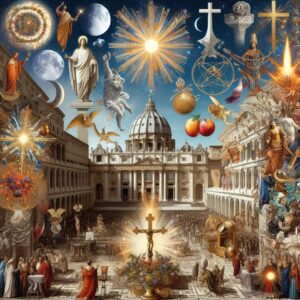
Greetings, fellow history enthusiasts! As the festive season descends upon us, laden with twinkling lights, delectable treats, and the joyous spirit of giving, I want to delve into a fascinating historical tapestry woven around December celebrations. Buckle up, for we’re embarking on a journey that spans continents, crosses centuries, and unravels the intriguing origins of Christmas, with a touch of celestial intrigue!
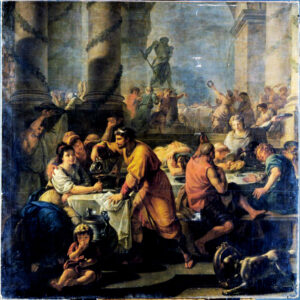
Photo Credit: Saturnalia by Antoine Callet
Saturnalia: A Riotous Roman Revelry
Our story begins in ancient Rome, where December wasn’t just about cozy fireplaces and carols. From December 17th to 23rd, the city erupted in a riotous festival called Saturnalia. While tradition places Jesus’ birthday on December 25th, historical and biblical scholars acknowledge that the exact date remains unknown. In fact, it wasn’t until the 4th century after Christ that December 25th began to be celebrated as Christmas.
Interestingly, this date coincided with the pagan festival celebrating the winter solstice and the birth of the sun god, marking the lengthening of days and symbolizing the triumph of light over darkness. In Rome, this festival was called Saturnalia, a time of revelry, liberation, and social inversion.
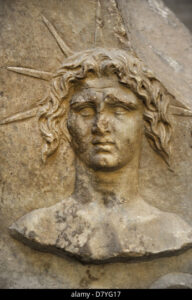
Sol Invictus: The Sun God Takes Center Stage
As the Roman Empire embraced Christianity, a new player entered the December scene: Sol Invictus, the Roman Sun God. Emperor Aurelian established December 25th as his official birthday, aligning it with the winter solstice and imbuing it with potent solar symbolism. This resonated with the Christian concept of Jesus as the “Light of the World,” paving the way for the eventual association of December 25th with Christ’s birth.

Uttarayana: Echoes of the Sun’s Journey in India
But our story doesn’t end in Rome. Across the vast expanse, in the vibrant tapestry of Indian culture, we find a fascinating parallel in the festival of Uttarayana. Celebrated on Makar Sankranti, it marks the sun’s northward journey, signifying the lengthening of days and the triumph of light over darkness. Bonfires crackle, kites soar into the azure sky, and families gather to celebrate the abundance of the harvest. The symbolism of the sun’s victory over darkness resonates deeply with the Christian narrative of Christmas, offering a glimpse into the shared human experience of seeking hope and renewal during the darkest time of year.

Celestial Clues: Unveiling the Heavens
Adding another layer to this intricate story, some scholars point to intriguing astronomical clues that might align with Jesus’ birth. The Greek word for “wonder” in Luke 2:12 can be interpreted as “sign,” and some believe there could be celestial markers associated with Mary’s pregnancy. The signs of the Zodiac were originally not used in astrology but held symbolic meaning. Notably, the constellation Virgo in Revelation 12 is associated with Mary and motherhood, and on September 11, 3 B.C., the sun and moon were both positioned in Virgo. This date also coincides with Tishri 1 on the Jewish Calendar, the first day of the Feast of Trumpets, further adding to the potential significance.
Additionally, September 11th, 3 B.C., witnessed a rare astrological event: a close conjunction of Jupiter and Regulus, the “king star,” before dawn. Jupiter and Venus were also positioned within Leo, the sign of Judah, the lineage from which the Messiah was prophesied to come. Interestingly, the New Moon occurred on September 11th, representing the Jewish New Year, and Jupiter’s position over Regulus over an eight-month period mirrored a “crowning effect” in the heavens.

A Tapestry of Traditions, Woven Through Time
While the exact date of Jesus’ birth remains a mystery, December 25th has become deeply entwined with the celebration of Christmas. The echoes of pagan traditions like Saturnalia and Sol Invictus, interwoven with Christian symbolism and intriguing astronomical alignments, contribute to the rich tapestry of this festive season.
So, as we raise a toast to Christmas this year, let us remember the fascinating past, filled with astronomical possibilities and cultural crossroads. Let the twinkling lights be a reminder of the sun’s inevitable return, and let the shared laughter and feasting be a testament to the enduring power of tradition woven through time and across cultures.
May this festive season be filled with light, joy, and a sense of wonder as we explore the stories, traditions, and mysteries that illuminate the December skies.
P.S. This blog is just a starting point. Feel free to explore further! Delve into the fascinating history of Saturnalia, research the symbolism of Sol Invictus, or discover the regional variations of Makar Sankranti. The more we learn, the richer our understanding.
Happy Holidays!
Can Artificial Intelligence Destroy Our World? Unveiling the Threats and Challenges
In the evolving landscape of technology, the rise of Artificial Intelligence (AI) brings forth both unprecedented possibilities and imminent threats. This article delves into the multifaceted dimensions of AI, particularly focusing on the perilous aspects associated with deepfakes and advanced AI systems like ChatGPT-4.
Deepfakes in the Spotlight: The Warning from Indian PM Modi
Recently, Indian Prime Minister Narendra Modi sounded an alarm on the dangers of Artificial Intelligence, highlighting the specific concern surrounding deepfakes during a Diwali Milan program. He shows a video of his own where he is doing the Garba (a form of Gujarati dance), even though he says that he hasn’t done the Garba since his school days.
In another instance, two videos featuring popular film personalities like Rashmika Mandanna and Kajol surfaced! The ladies in this video were not Rashmika or Kajol, but they looked like them. While these instances may appear innocuous, they underscore the technology’s capacity for misuse and its potential for more serious implications.
Deepfakes: A Looming Threat
Deep Fakes, manipulated videos often created using generative adversarial networks (GANs), raise significant ethical and security concerns. The deceptive potential of deepfakes is illustrated through seemingly the above instances, such as fabricated videos featuring popular personalities.
Understanding Deepfake Technology
The Mechanism behind Deepfakes
Deepfake technology relies on generative adversarial networks (GANs), a type of deep learning algorithm. GANs consist of a generator and a discriminator working in tandem to produce realistic videos by manipulating original content. The rapid evolution of GANs, fueled by advancements in computing power, data availability, and algorithmic improvements, has propelled the widespread use of deepfakes.
Legitimate Applications and Ethical Considerations
Despite the concerns associated with deepfakes, GANs have legitimate applications, such as creating visual effects in the entertainment industry and aiding research in data augmentation. However, the ethical implications of using advanced video manipulation techniques, especially for subversive ends, raise serious national security concerns.
Deepfakes in Action: A Spectrum of Threats
Scams/Frauds and Identity Theft
Deepfakes extend beyond the domain of misinformation, infiltrating areas like scams and identity theft. Criminals can exploit voice cloning for scams, mimicking the voices of individuals to deceive and manipulate unsuspecting targets, as exemplified by a notable incident in the British energy sector.
Sextortion and Election Frauds
The technology’s darker applications include Sextortion, where pornographic deepfakes can be created for extortion or revenge. Moreover, the potential use of deepfakes in election fraud is a significant concern, as fabricated clips can tarnish reputations and manipulate public opinion, as seen in the case of Nancy Pelosi.
Geopolitical Crises: Ukraine’s Deepfake Incident
The geopolitical ramifications of deepfakes were starkly evident during Russia’s invasion of Ukraine, where a fabricated video of President Zelensky surrendering went viral. The incident highlights the challenges nations face in countering deepfake-driven disinformation campaigns during critical events.
The Militarization of Deepfakes: A New Era in Espionage
The Revolution in Military Affairs (RIA)
AI’s impact on espionage is undergoing a paradigm shift known as the “revolution in military affairs” (RIA). Machines are no longer mere tools for information collection; they are evolving into intelligence consumers, decision-makers, and potential targets in a complex interplay of technology and national security.
Countermeasures: Israel’s Use of Generative AI
Despite the threats posed by deepfakes, there are efforts to thwart their malicious use. Israel’s Shin Bet security service employed generative AI to counter substantial threats, emphasizing the need for advanced technology to navigate the challenges posed by evolving security landscapes.
AI’s Existential Threat and the Call for Caution
Extinction-Level Threats
While some experts debate the likelihood of AI triggering extinction-level events, concerns persist about its potential to disrupt societies through pervasive misinformation, manipulation, and labor market transformations.
The Call for a Moratorium: Recognizing the Risks
Prominent figures in the tech industry, including Elon Musk and Steve Wozniak, have advocated for a six-month moratorium on developing advanced AI systems beyond a certain threshold. The urgency of this call reflects the perceived risks associated with the unchecked development of super-intelligent AI models.
The Path to Artificial General Intelligence (AGI)
As AI approaches human intelligence levels, termed artificial general intelligence (AGI), the risks become more pronounced. AGI safety researchers emphasize the potentially catastrophic consequences if decision-making falls into the hands of advanced AI systems.
Conclusion: Navigating the Uncharted Territory
A New Era for Humanity
As advanced AI becomes increasingly prevalent, humanity stands at the threshold of a transformative era. While researchers express caution about AI models surpassing certain limits, the question remains: Will intelligence agencies refrain from developing their own advanced AI versions? The global landscape, with China, the U.S., Israel, and others investing heavily in AI technologies, underscores the need for responsible development to navigate the uncharted territory of artificial intelligence.
In this intricate dance between technological progress and existential threats, the world must collectively strive for ethical AI frameworks and international cooperation to ensure the responsible use of these powerful tools. The repercussions of failing to do so could propel us into an era where the very technology designed to enhance our lives becomes a potential catalyst for unforeseen catastrophes.
Sources:
“Democracies Are Dangerously Unprepared for Deepfakes” – Center for International Governance Innovation
“Deepfakes and International Conflict” – Brookings (Jan 2023)
“U.S. Special Forces Want to Use Deepfakes for Psy-ops” – The Intercept
“AI as Spy? Global Experts Caution That Artificial Intelligence Is Used To Track People, Keep Their Data” – Science Times
“Robot takeover? Not quite. Here’s what AI doomsday would look like” – The Guardian
“Is This the Start of an AI Takeover?” – The Atlantic
Mahabharat: An Enduring Legacy, A Timeless Epic

Emerging from the depths of ancient India, the Mahabharat stands as a towering monument of epic literature, a grand narrative that has captivated and inspired generations. Its intricate tapestry weaves together tales of heroism, betrayal, love, loss, and the profound complexities of human nature.
The Mahabharat’s origins trace back to the Vedic period of Indian history, approximately between the 12th and 8th centuries BCE. The epic is believed to have undergone a long and gradual process of composition, absorbing and incorporating various oral traditions and literary works over centuries.
Traditionally attributed to the sage Vyasa, the “Vyasa Mahabharat” is considered the primary and authoritative version.
However, over the centuries, various scholars and poets have composed their own versions, commentaries, or retellings of the Mahabharat, bringing their interpretations and nuances to the narrative.
Length and Structure
The Mahabharat attributed to Vyasa is considered the longest Sanskrit epic, comprising about 100,000 shlokas (verses) organized into 18 parvas (books). This vast expanse of text encompasses a multitude of stories, philosophical discourses, and didactic teachings, making it a veritable encyclopedia of Indian culture and thought.
Other versions, such as the Jain Mahabharat and the Tamil Mahabharat, are significantly shorter, typically containing around 25,000 shlokas. Additionally, these versions often rearrange or omit certain parvas from Vyasa’s Mahabharat.
Interpolations and Additions
The Mahabharat’s long and complex history of transmission has resulted in the accumulation of numerous interpolations and additions. It has undergone numerous interpolations and additions over time, incorporating stories, teachings, and philosophical discussions from various sources. While some of these interpolations are present in Vyasa’s Mahabharat, others are more prevalent in later versions. These extraneous elements, ranging from mythological narratives to philosophical treatises, have enriched the epic’s diversity but also posed challenges in determining the original text.
Various Editions: A Journey through Texts
The Mahabharat exists in numerous recensions (revised versions) and editions, each reflecting the cultural and linguistic influences of its region and era. Among the most prominent are the Southern Recension, prevalent in South India, and the Northern Recension, found in North India and Kashmir. These recensions exhibit variations in text arrangement, content, and language. Among various recensions, translations, and retellings, here are some notable versions:
- Critical Edition (CE): The Bhandarkar Oriental Research Institute in Pune, India, produced the Critical Edition of Mahabharat in the early to mid-20th century. This version attempts to present a standardized and comprehensive text based on the examination of numerous manuscripts. The CE is considered an authoritative scholarly edition.
- Regional Versions: Mahabharat has been retold and adapted in various regional languages across India. Each region may have its own linguistic and cultural nuances, resulting in diverse interpretations of the epic.
- Translations: Several scholars have translated Mahabharat into different languages, making it accessible to a global audience. Notable translations include those by Kisari Mohan Ganguli’s English translation (1884-1896), J.A.B. van Buitenen’s English translation (1973-1981), K.M. Gangaraju’s English translation with inclusion of the CE text (2013-2014) and Bibek Debroy’s English translation (2010-2017)
- Modern Retellings: Many authors have written modern adaptations and retellings of the Mahabharat, presenting the ancient narrative in contemporary language and context. Authors like Devdutt Pattanaik, Carole Satyamurti, Arvind Adiga, Ramesh K. Srivastava and Chitra Banerjee Divakaruni have offered their interpretations.
- Television and Film Adaptations: The Mahabharat has been adapted into numerous television series and films, both in India and internationally. These adaptations often take creative liberties with the source material.
- Performing Arts: The epic has been a source of inspiration for various performing arts, including traditional Indian dance and theatre forms. These performances contribute to the living tradition of the Mahabharat.
A Timeless Epic
The Mahabharat’s enduring appeal lies in its profound exploration of human emotions, its timeless themes of dharma (righteousness), karma (action and its consequences), and the quest for moksha (liberation). Its characters, from the noble Arjuna to the cunning Duryodhana, embody the multifaceted nature of human existence, their struggles and triumphs resonating with readers across cultures and generations.
The Mahabharat is not merely a story; it is a mirror reflecting the depths of human experience, a repository of wisdom, and a testament to the power of storytelling. Its enduring legacy continues to inspire, challenge, and shape our understanding of the human condition.
Human Laws versus Laws of Nature

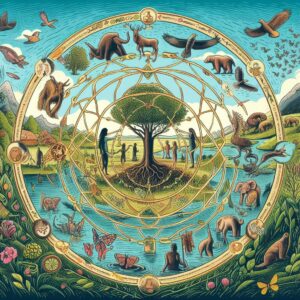
In this grand embroidery of existence, where the cosmos dances to the tunes of change and uncertainty, one immutable truth stands tall: the eternal nature of natural laws. Despite the diverse opinions of scientists, there is a unanimous consensus on this fundamental principle. The laws that govern the universe are steadfast, unyielding to the whims of time and space. This universal constancy is the bedrock upon which the edifice of science stands. The chemical composition of water, the geometric precision of a triangle—these laws have remained unaltered through millennia, transcending the boundaries of geography and history.
Yet, amidst this cosmic order, there exists a complexity unique to human consciousness. The human mind, a blend of objectivity and subjectivity, is a metaphysical entity, that delving into the realms beyond the physical. Life, intertwined with the laws of biology, psychology, and sociology, is a puzzle that defies the simplicity of scientific laws governing the inanimate. Human existence, with its ethical, aesthetic, religious, and social dimensions, eludes the rigid frameworks of physics and chemistry.
The relationship between human laws and the laws of nature is complicated, mirroring the intricate dance between the rider and the horse. Human laws, the edicts forged by human intellect, are attempts to synchronize human will with the natural order. Yet, in this endeavour, man grapples with the limitations of his understanding. The laws created by humanity are not infallible; they fluctuate with human insight and foresight. They are subject to change, reflective of the evolving human comprehension of the world.
The human brain, a non-material entity in its most profound form, navigates the complexities of existence. It orchestrates the delicate balance between adapting to nature and shaping it to its needs. Human laws, therefore, become the tools by which this delicate equilibrium is maintained. However, these laws are not inscribed in the fabric of the universe like the laws of nature; they are products of human endeavour, shaped by the collective will of societies.
In contemplating the interplay between human laws and the laws of nature, the enigma of free will emerges. Man’s freedom enables him to act, to choose, and to mold his destiny. Simultaneously, man is finite, confined within the boundaries of his understanding. The amalgamation of these traits creates a dynamic tension—a struggle to comprehend the world, to adjust to nature, and to harmonize individual and collective aspirations.
| Aspect | Human Laws | Laws of Nature |
| Eternality | Not eternal, subject to change over time | Eternal, unchanging, unaffected by time |
| Origin | Created by humans for societal order | Inherent in the universe, not created |
| Universality | Subjective, varies across cultures/societies | Universal, applies uniformly everywhere |
| Flexibility | Flexible, adaptable, can change with societal needs | Fixed, constant, and unalterable over time |
| Coordination | Aim to coordinate human actions with natural laws | Inherent coordination within natural processes |
| Scope | Limited to human societies and interactions | Encompasses all natural phenomena and substances |
| Subjectivity | Reflect societal norms, values, and perceptions | Independent of human perception, objective truths |
| Changeability | Changeable, influenced by evolving human understanding | Immutable, not influenced by human perception |
| Purpose | Serve societal order, balance individual freedom and societal harmony | Govern natural processes, provide framework for scientific understanding |
This table summarizes the distinctions between Human Laws and Laws of Nature based on the original write-up.
Religion, in this context, becomes a manifestation of this intricate relationship. It is the endeavour of living beings, akin to a plant growing with the help of a gardener. The coordination of the living being with the laws of nature, an organic and symbiotic relationship, constitutes the essence of true religion. Human laws, as the guidelines born from this coordination, reflect the ever-changing nature of human understanding and societal needs.
In the grand narrative of existence, human laws stand as a testament to humanity’s quest for equilibrium, understanding, and progress. As humanity strives to synchronize its will with the laws of nature, the evolution of human laws becomes a profound saga of adaptation, learning, and growth. It is a testament to the ceaseless endeavour of the human spirit—an ongoing odyssey to unravel the mysteries of the universe, harmonize with the natural order and carve a path towards a more enlightened future.
P.S.
Natural law refers to the eternal, unchanging, and fundamental laws that govern the universe. These laws are consistent and constant, transcending the constraints of time and space. They dictate the chemical composition of substances, the geometric properties of shapes, and other inherent characteristics of the natural world. Natural laws are universal truths that remain unaffected by human perception or understanding. They are the foundational principles upon which scientific knowledge is built, providing a framework for understanding the physical and biological phenomena in the universe.
Human law pertains to the laws created by humans for themselves or others over time. Unlike natural laws, human laws are not eternal or unchangeable. They are shaped by human intellect, reflecting societal norms, values, and needs. These laws are subjective, varying from one culture, era, or society to another. Human laws are attempts made by societies to coordinate human actions with the laws of nature. They are tools crafted to maintain a delicate balance between individual freedom, societal order, and the ever-changing understanding of the world. Human laws are a manifestation of humanity’s effort to adapt to and harmonize with the natural order, reflecting the evolving nature of human consciousness and societal dynamics.
The Kodavas and the Ahoms: The Unsung Saga of Valour in the Indian History
In the vast tapestry of Indian history, there are countless tales of valour, resilience, and unwavering spirit. Yet, amidst the grand tales of empires and dynasties, there lie stories of Hindu communities, whose contributions to the nation’s heritage often remain hidden and untold. Among these unsung heroes are the Kodavas of Karnataka and the Ahoms of Assam, whose martial prowess and unwavering defense of their homeland deserve to be etched in the annals of history.
Why are they not mentioned in our History books? Why did the Kodavas and Ahoms remain mere footnotes in Indian history? I leave these questions to the readers, urging them to ponder the silent narratives that deserve to be heard.
The Kodavas: A Bulwark against Tipu Sultan’s Expansion
Defeated Tipu Sultan 31 times despite being outnumbered 1:3
Nestled amidst the verdant hills of Karnataka, the Kodavas are a warrior clan with a rich martial tradition. Their history is intertwined with the region’s defence against external threats, particularly from the formidable Tipu Sultan of Mysore.
Tipu Sultan, a skilled military commander, sought to expand his kingdom’s reach into the Kodava region, but the fierce resistance of the Kodavas with their intimate knowledge of the terrain and their unparalleled fighting skills defeated Tipu Sultan 31 times despite being outnumbered 1:3. Their unwavering resistance played a crucial role in safeguarding the region’s independence and preserving the Kodava way of life.
The Ahoms: A Bastion of Resistance Who Defeated Mughals 17 Times
In the eastern reaches of India, the Ahoms, a Tai-speaking people, established a powerful kingdom in Assam. From the 16th to the 18th centuries, they faced repeated incursions by the Mughals, the vast empire that ruled much of the subcontinent.
The Ahoms, though smaller in number, were adept at guerrilla warfare and utilized their knowledge of the terrain to their advantage. They successfully repelled 17 Mughal invasions, effectively protecting their kingdom from Mughal domination.
The Ahoms’ military prowess was not their only legacy. They also made significant contributions to Assam’s cultural, artistic, and economic development. Their reign ushered in a period of stability and prosperity for the region.
The Need to Reclaim Our History
The stories of the Kodavas and Ahoms are not mere footnotes in Indian history; they are testaments to the resilience and fighting spirit of smaller communities that played a significant role in shaping the nation’s heritage.
Reclaiming these untold stories is crucial for providing a more inclusive and accurate representation of Indian Hindu history.
The Kodavas and Ahoms stand as reminders of the indomitable spirit of the Indian people, their ability to defend their homeland, and their contributions to the nation’s rich tapestry of cultures and traditions. Their stories deserve to be heard, remembered, and celebrated, ensuring that they are no longer unsung heroes but shining examples of courage, resilience, and unwavering patriotism.
Important to Note:
Kodavas: The Kodavas are a warrior clan native to Kodavu, a hilly region in Karnataka, India. They have a long and rich history, and their culture is deeply rooted in Hinduism. Kodavas are known for their martial prowess and their traditional way of life. They are also known for their unique language, Kodava Takk.
Ahoms: The Ahoms are a Tai-speaking people who established a powerful kingdom in Assam, India, from the 16th to the 18th centuries. They were originally followers of Theravada Buddhism, but they gradually converted to Hinduism over time. The Ahoms made significant contributions to Assamese culture, including art, architecture, and literature.
While both the Kodavas and the Ahoms have faced challenges and threats throughout their history, they have retained their unique identities and their Hindu traditions. They are an important part of India’s rich cultural heritage.
The Journey Within – Part 1: Exploring the Layers of the Self


In the intricate tapestry of our existence, there lies a profound truth – our being is not merely confined to our physical form but extends far beyond, delving into the realms of subtlety and causality.
In Hindu philosophy, the concepts of Sthool Sharir (The Physical Body), Sukshm Sharir (The Subtle Body or The Nervauric Body), and Karan Sharir (The Causal Body). References to these concepts can be found in ancient Hindu texts such as the Upanishads, Vedas, Bhagavad Gita, and various philosophical texts from different schools of thought within Hinduism. Each school of thought might interpret and elaborate on these concepts differently based on specific scriptures and traditions being followed.
Much like safeguarding our physical health, it is important to protect and nurture these ethereal aspects of our being.
- Physical Body (स्थूल शरीर):
Our physical body, a marvel of nature, is a complex composition of sensory (eye, ear, tongue, nose, skin) and action organs (speech, hand, foot, reproductive organ, excretory organ), intertwined five elements (earth, fire, water, air, space). It is the vessel through which we perceive the world, a dwelling place for the Atman (soul). The physical body is lifeless if there is no Atma in it. But beyond its tangible existence lies the subtle body, an intangible essence that transcends the physical.
- The Subtle Body (सूक्ष्म शरीर):
Nestled within the physical, the subtle body embodies our intellect, ego, and mind. The subtle body consists of a life force (prana) that divides into five “Vayus” (vital airs), channelled through the energy centres or ‘Panchakoshas’ (five sheaths) identified as Annamaya Kosha (food sheath), Pranamaya Kosha (energy sheath), Manomaya Kosha (mind sheath), Vijnanamaya Kosha (wisdom sheath), and Anandamaya Kosha (bliss sheath). Check the table and an illustration below.
EACH VAYU GOVERNS DIFFERENT FUNCTIONS AND ASPECTS OF BEING
| Vayu | Area of Body | Function |
| Prana | Chest, Head | Governs intake, inspiration, propulsion, forward momentum |
| Apana | Pelvis | Governs elimination, downward and outward movement |
| Samana | Navel | Governs assimilation, discernment, inner absorption, consolidation |
| Udana | Throat | Governs growth, speech, expression, ascension, upward movement |
| Vyana | Whole body | Governs circulation on all levels, expansiveness, pervasiveness |
| Kosha (Sheath) | Function | Associated Aspect |
| Annamaya Kosha (अन्नमय कोश) | Physical Body | Food and Nourishment |
| Pranamaya Kosha (प्राणमय कोश) | Vital Energy | Breath and Life Energy |
| Manomaya Kosha (मनोमय कोश) | Mind | Thoughts and Emotions |
| Vijnanamaya Kosha (विज्ञानमय कोश) | Intellect or Wisdom | Knowledge and Discrimination |
| Anandamaya Kosha (आनंदमय कोश) | Bliss or Spiritual Core | Innermost Joy and Contentment |
This subtle form, imperceptible to ordinary eyes, is the seat of our deeper consciousness. Yogis, through dedicated practice, traverse beyond the subtle, touching the very essence of their existence – the soul.
- The Causal Body (कारण शरीर):
For those enriched with noble intentions and profound devotion, the causal body flourishes. Divine glories from liberation and peace to self-realization and vision of Ishwar (God) are all depend on the capability of this causal body. It contains the impressions of the Atma, feelings, thoughts, desires, tendencies, wishes, experiences, and knowledge in the form of seeds. It also collects thoughts, feelings and memories in the form of seeds. This ethereal repository shapes our spiritual journey, leading us from one life to another. In the pursuit of मोक्ष or Moksha (liberation), the causal body dissolves, merging the soul into the cosmic expanse.
Moksha (liberation): At the time of Moksha, even the physical, subtle and causal bodies fall. Then, there is no birth (avatar) of the Atma. Then, that Atma merges into the cosmic being.
The Journey Within:
To truly understand the self is to embark on an odyssey through these layers – physical, subtle, and causal. Ordinary perception can only grasp the surface, but through yogic insight and deep meditation, one can unravel the intricate tapestry of one’s existence. In the ultimate state of Samadhi, beyond the realms of meditation and yoga, the Atma meets its divine source, transcending the boundaries of birth and death.
Conclusion:
In the grandeur of our existence, our physical form is but a fraction of our being. As we delve into the subtleties of our consciousness and fathom the depths of our Atma (soul), we unveil the profound interconnectedness of all existence. It is in this exploration, this intimate journey within, that we discover the timeless wisdom of our existence, transcending the mortal coil and touching the infinite.