Saluting Sangeet Theatre: A Legacy of English Cinema in Hyderabad & Secunderabad (1969–2007)


Once upon a time, in the heart of Secunderabad, there stood a cinematic marvel that would change the lives of movie lovers forever. The year was 1969 when the iconic Sangeet 70mm theatre graced the cityscape. Sangeet 70mm theatre, Secunderabad, was the landmark cinema hall and a popular destination for over five decades for Hollywood blockbusters and iconic Hindi films.
In the realm of cinema, Sangeet was a pioneer. In 1994, it proudly installed the Ultra Stereo Optical Sound system, followed by the cutting-edge Digital Theatre System in 1995. These technological leaps elevated the movie-watching experience to new heights.
Where Magic of Movies Unfolded
For the movie lovers of the city, especially Secunderabad, Sangeet wasn’t just a theatre but a gateway to their cherished memories of youth. It was here that they devoured English classics like “Gone with the Wind” and “Falling in Love.” Hollywood’s “Camelot” graced its screens as the inaugural film, while the Bollywood blockbuster “Hum Aapke Hain Kaun” enjoyed a year-long morning show run.
In the Halls of Nostalgia
My own memories of Sangeet Theatre are painted with the golden hues of classic Hollywood. It was here that I embarked on cinematic journeys with titles like “Mackenna’s Gold,” “Jaws,” and ’80s gems like “Indiana Jones.” Sangeet was my gateway to Hollywood’s finest: “Home Alone,” “Jurassic Park,” “Titanic,” and so much more.
“Home Alone” holds a special place in my heart, for it was my maiden voyage into Sangeet’s cinematic wonders. As I gazed at the eclectic crowd, I couldn’t help but feel awe-inspired. I began wondering where on earth am I? For Hyderabadis like me, the Secunderabad audience was much more evolved. They had a flair for English movies, from their English-speaking accents to their dressing style. Watching the movies as a young adult, I was awed and admired Macaulay Culkin for his guts and wit.
The Rise of English Cinema
Sangeet held a unique charm for English enthusiasts like us, particularly in the early ’90s. It was the era when English songs filled our homes, thanks to my younger brother’s newfound passion. English movie fever soon followed suit, and our family gatherings resonated with the tunes of English songs.
More Than Just a Theatre
Over the years, Sangeet became an integral part of a newfound culture in the city. Conversations in the theatre during the interwells were flavoured with the colloquial use of ‘ya’ instead of ‘yes.’ Urbanization had taken root, and Sangeet was at its heart. The theatre’s green chutney sandwiches and espresso coffee were legendary, satisfying the cravings of moviegoers.
Beyond the Screen
Just a stone’s throw away stood ‘Fantasy,’ a premium eatery renowned for its tall chairs and delectable offerings. It was the go-to spot for youngsters like us, offering Fantasy champagne, burgers, hot chocolate, and non-alcoholic root beer during the prohibition era. It had everything we needed but was very expensive, between Rs 15-25!!! (during the early 1990s)
Sai, the Magician of Tickets
During ticket crises, one man always emerged as our saviour – Sai. He worked in the parking lot. He secretly arranged tickets for us. His limping figure amidst parked vehicles was a beacon of hope. He used to vanish and reappear in mere minutes with those precious tickets in hand, like a magician.
Cinematic Beginnings of My Career
As the reels of time spun on, Sangeet showcased cinematic treasures like “Beethoven,” “Gone with the Wind,” “Showdown in Little Tokyo,” “Jurassic Park,” “Free Willy,” and “Clear and Present Danger.” These films unknowingly laid the foundation for my content/copywriting career, instilling in me a deep appreciation for storytelling.
My Final Bow
In 2007, the curtains fell on the Sangeet 70mm theatre, making way for a modern multi-speciality hospital… Sangeet may be gone, but it lives on in the memories it gifted me.
A Monument of Memories
For me, Sangeet Theatre isn’t just a relic of the past; it’s a monument of cherished moments. It brought friends together, kindled conversations, and made us appreciate life’s simple pleasures – a Rs 5 chips packet, budgeting for a Rs 25 ticket, and not worrying about parking. Each moment spent there transformed us, leaving an indelible mark on our lives.
Celebrating Ganesh Chaturthi with the Gift of Presence: Lessons from Babies, the Masters of Mindfulness
In the hustle and bustle of our adult lives, we forget the simple yet profound wisdom that babies hold. These tiny tots, with their wide-eyed wonder and boundless curiosity, have a lot to teach us about living in the present moment and the art of “letting go.” They are, in many ways, the true mindfulness gurus of our world.
A Profound Lesson from Curious Souls
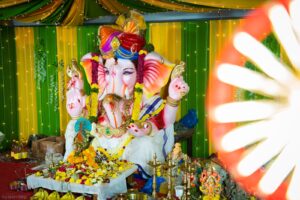
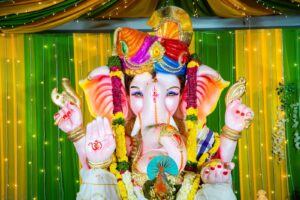
Yesterday evening, as I attended Puja amidst the vibrant chaos of our Ganesh Pandal, a profound lesson unfolded before my eyes. It was a lesson on how to live life in the present moment, unburdened by labels and notions. The teachers teaching me these lessons were none other than the curious, wide-eyed children, hardly a year or two old, who were playing inside the Pandal. They became my gurus on the art of “letting go.”
A Playground of Wonder and the Magic of Living in the ‘Now’
The Pandal was alive with prayers, songs, performances from kids and the magnificence of the Ganesh Murti. Yet, amidst this grandeur, it was these children who truly stole the show (for me). They ran around with unbridled enthusiasm, their tiny hands reaching out to touch the world. What fascinated them the most were the serial bulbs adorning the Pandal and the whirring table fans.
Babies have an extraordinary ability to live in the ‘now.’ They don’t dwell on the past or fret about the future; instead, they fully embrace the present moment. Every second is an opportunity for discovery, a chance to experience life’s wonders firsthand. As adults, we often lose touch with this innate ability, weighed down by labels, names, preconceived notions, and ideas. We’re so busy categorizing and analyzing that we forget how to simply be.


The Adult Mind Trap
Babies live in a world devoid of labels and notions. They don’t label a tree, a bird, or a cloud. To them, everything is fresh and new, waiting to be discovered. This unburdened perspective allows them to see the extraordinary in the ordinary.
As adults, we often lose this ability. We become prisoners of our own categorizations and judgments. We see a tree and label it as a ‘tree,’ failing to appreciate its unique beauty. We hear a song, but our minds are already dissecting its genre and meaning. We meet people and quickly form opinions based on our preconceived notions.
The Gift of Mindful Presence
Babies remind us of the precious gift of mindful presence. When we let go of the need to label, categorize, and judge, we open ourselves up to a world of wonder and awe. Every moment becomes an opportunity to experience life anew. Just like a child’s first steps or their first taste of ice cream, we can savour each experience, no matter how small.

Embracing Each Day as a New Beginning
Perhaps one of the most significant lessons babies offer is their approach to each day. For them, every sunrise is a fresh start, a new beginning filled with endless possibilities. They don’t carry the baggage of yesterday’s worries or tomorrow’s anxieties. As adults, we can learn to adopt this perspective and greet each day with open hearts and open minds.
Learning from the Masters of Mindfulness
Babies may not have mastered the complexities of language, but they are undoubtedly the masters of mindfulness. Their ability to live in the present, free from labels and notions, is a powerful reminder of what it means to experience life truly. As we navigate our adult lives, let’s take a page from their book and strive to live in the moment, savouring every second as if it were our first.
In the end, the greatest teachers of mindfulness may be the tiniest among us. So, the next time you find yourself caught up in the whirlwind of adult life, take a moment to observe a baby’s unfiltered wonder, and you might just rediscover the beauty of living in the ‘now.’
The Wisdom of Letting Go: A Lesson from Zen Master Zhaozhou

In the bustling Tang dynasty of 9th century China, a wise Zen master named Zhaozhou held court in his serene monastery. On one fateful day, a wandering monk named Yanyang arrived seeking answers to life’s profound questions.
With a sense of emptiness, Yanyang approached the master and asked, “I have come with nothing. What do I do in such a case?”
Zhaozhou, renowned for his quick wit and deeper wisdom, responded without hesitation, “Throw it away.”
Puzzled but undeterred, Yanyang persisted, “I said I came with nothing, so what do you expect me to throw away?”
The Zen master, ever so patient, replied with a knowing smile, “Then hurry and take it away.”
In these few words, a profound lesson unfolds—a lesson that transcends time and culture.
The Illusion of Possession
At its core, Zhaozhou’s teaching challenges the very concept of possession. Yanyang came seeking guidance, admitting he carried nothing with him. Yet, he unwittingly held onto the idea of possessing “nothing.” In our lives, we often grapple with similar illusions. We clutch onto intangible concepts, beliefs, or desires, believing them to be something we must protect or accumulate.
The Art of Letting Go
Zhaozhou’s swift response, “Throw it away,” urges us to release our grip on these illusions. It encourages us to relinquish the burdens we carry—whether they are physical possessions, emotional baggage, or ingrained beliefs. In the act of letting go, we free ourselves from the self-imposed constraints that limit our potential for growth and inner peace.
The Paradox of Attachment
Yanyang’s persistent query reflects a paradox of human existence. We often hold tightly to things we believe define us—our possessions, achievements, and even our identities. Yet, in doing so, we unintentionally create barriers to our own spiritual and emotional growth. Zhaozhou’s playful response, “Hurry and take it away,” reminds us that the true essence of our being lies beyond these attachments.
The Cosmic Perspective
Zooming out from this ancient encounter, we find a reflection of our relationship with the universe. We, as a species, are driven by a desire to control our surroundings, to amass possessions, and to conquer the unknown. We strive to bend the cosmos to our will, even as we stand on the precipice of annihilation or enlightenment.
The Cosmic Balance
However, the universe operates on its own set of principles, maintaining an exquisite balance that transcends our comprehension. When we attempt to tip the scales in our favour at the expense of others or the environment, we sow the seeds of imbalance. The more we disrupt this equilibrium, the more violent nature’s corrective measures become.
The Wisdom of Surrender
In the end, Zen Master Zhaozhou’s lesson is one of surrender. It invites us to release our need for control and possession, to let go of the illusions that bind us, and to recognize our place within the grand cosmic scheme. When we embrace the art of letting go, we harmonize with the universe, finding peace and wisdom in the process.
So, as you journey through life’s intricate tapestry, remember the wisdom of Zhaozhou. Sometimes, the most profound lessons come from the simplest truths—like the power of letting go.
Unveiling the True Essence of ‘Murti’ and ‘Vigraha’ in Hindu Worship
Beyond Labels and Misconceptions
As the joyous festivities of Ganesh Chaturthi sweep through the land, one word echoes in the air: “idol.” For centuries, the Western world has cast India as the realm of idols and idolaters, often using these terms to belittle Indian traditions while elevating Abrahamic faiths as more progressive. But is there more to this than meets the eye?
In the world of Indian art and spirituality, the term ‘icon’ is often used to describe metal figurines, like bronze icons. Conversely, ‘idol’ typically refers to a figurine or statue worthy of worship. However, these labels barely scratch the surface of the profound meanings hidden within the words ‘Murti’ and ‘Vigraha.’
The Living Embodiment: Murti
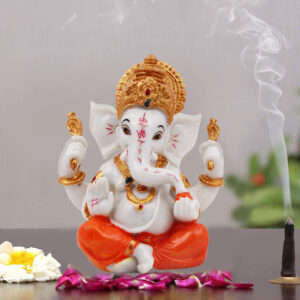
‘Murti’ is more than a lifeless idol; it embodies something, living on after a consecration process known as ‘prana prathishta.’ This sacred transformation renders it far from lifeless; it becomes a living representation of the divine.
Understanding ‘Graha’ and ‘Vigraha’
To grasp the significance of ‘Vigraha,’ we must first explore the root word ‘Graha.’ In the context of Indian astronomy (Jyotisha), ‘Graha’ goes beyond mere planets. It signifies any object in space that occupies a specific place. This includes lunar nodes like Rahu and Ketu, which occupy space during eclipses.
The term extends to daily life too. A wife is referred to as ‘grahini,’ signifying her as the queen of the household, while her husband is called ‘grahastha,’ indicating his role as the occupant of the home with his family. ‘Graha’ denotes the act of occupying a marked space, whether it’s physical or emotional, gross or subtle. Even at the atomic level, where particles seem minuscule, they still occupy space.
Murti: A Multifaceted Occupant
The ‘Murti’ you worship occupies space in two profound ways:
- Physical Presence: As a physical entity, it occupies a defined space on the Earth. It stands as a tangible representation of the divine in our material world.
- Heartfelt Presence: Beyond the physical realm, the ‘Murti’ finds a special place in your heart. Here, it’s not just a physical object; it’s a ‘Vigraha.’ The prefix ‘vi’ signifies its unique and cherished status. It’s deeply entrenched in the realm of the divine and occupies a special place in your heart and home.
A Path of Surrender: Puja and Vigraha
Murti and Vigraha aren’t mere objects; they are conduits to the divine. Puja, the act of worship, becomes a beautiful way to surrender everything to the divine through these forms. It’s a means to pour out your love, devotion, and offerings, both inner and outer.
While European visitors may have seen Murti and Vigraha as mere works of art, for those filled with ‘bhakti’ (devotion), these forms occupy a sacred space within their hearts. It’s not idolatry but adoration, a profound connection with the divine.
A Call for Change: Embrace Murti and Vigraha
As we celebrate Ganesh Chaturthi, a time when millions bring a Murti of Lord Ganesha into their homes and perform pujas for ten days, it’s a perfect opportunity to shift our perspective. Let’s resolve to refer to these embodying forms of divinities as ‘Murti’ or ‘Vigraha’ instead of ‘idols.’ It’s time to change the narrative and recognize the special place they hold in the hearts of devotees.
May Lord Ganesha, the remover of obstacles, pave the way for this transformation, where we honor the essence of ‘Murti’ and ‘Vigraha’ as bridges to the divine.
Chasing Chips: The Irresistible World of Potato Chips and Other Junk Foods

Ah, the tantalizing allure of potato chips! Those crispy, salty, and oh-so-thin slices of golden deliciousness have been a snack-time staple for generations. But do you remember the iconic marketing slogan that forever etched these chips into our collective snacking consciousness? Let’s rewind to 1963 when young boys and girls at Frito-Lay were brainstorming marketing slogans for their famed potato chips. In the midst of it all, an elderly senior copywriter named Len Holton had an idea that would change snack history forever.
Holton jotted down five simple words on a piece of paper and slyly shared it with a colleague. As the note made its rounds across the room, minds were blown, and the rest is, as they say, snack history. The genius behind those five words? “Betcha can’t eat just one!”
“Lays’ potato chips: so light, so thin, so crisp, you can eat a million of them, but nobody can eat just one.”
Holton’s brilliantly clever slogan tapped into something fundamental about potato chips – their irresistibility. Even when you’re not ravenous, even when you swear you’ll savour just a single chip, it’s a lost cause. That entire bag vanishes into thin air before you know it.
Well, except for a select few exceptionally lucky superhumans who apparently possess the mythical power of chip restraint. (And yes, I envy you!)
Len Holton couldn’t have fathomed how profoundly the meaning of his words would evolve over the next six decades. Fast forward to today, and the landscape of food, snacking, and nutrition has transformed dramatically. With the rise in global obesity rates and a surge in food-related chronic diseases, the food industry has come under the microscope. Gone are the days when we were blissfully ignorant about what goes into our favourite snacks.
We’ve learned that food manufacturers have gone to great lengths to engineer packaged foods that make us want more than we actually need. Potato chips, like many ultra-processed foods, are meticulously crafted with the holy trinity of salt, sugar, and fat. It’s a recipe designed to hack the reward circuitry of our brains and induce artificial cravings.
Yes, you read that right – our beloved potato chips have a devious formula that taps into our most primal instincts, overriding the natural checks that should prevent us from overindulging. The result? We can’t eat just one chip because, unbeknownst to us, we’ve become addicted to that innocent-looking bag of chips. It’s a bit like falling for a cunning magician’s trick, only this time, the magic is in the flavour.
The science behind it is both fascinating and unsettling. Salt, sugar, and fat are like the three musketeers of the snack world, a power trio that creates a symphony of flavours and textures that we find impossible to resist. The salt tickles our taste buds, the sugar adds a hint of sweetness, and the fat delivers that mouthwatering richness. It’s a trifecta that keeps us reaching for chip after chip.
But here’s the kicker: These snacks are intentionally engineered to be highly palatable and hyper-rewarding. Food scientists know precisely how to strike that addictive balance, and they use it to keep us coming back for more. It’s a bit like a culinary conspiracy, and we’re the unsuspecting victims.
So, the next time you find yourself gazing into an open bag of potato chips, unable to stop at just one, remember that you’re not alone. You’re simply falling prey to the masterful art of snack engineering that Len Holton’s timeless slogan unwittingly celebrated.
In the end, while we may not be able to resist the siren call of those perfectly crispy chips, it’s essential to be mindful of our snacking habits. After all, even though they’re utterly irresistible, moderation is still the name of the game. So go ahead, and enjoy those chips, but do it with your eyes wide open, knowing that you’re up against a formidable foe – the snack industry’s secret formula. And remember, you can’t eat just one, but you can always strive for a healthier balance in your snack choices. Happy munching!
Beauty Beyond Perfectionism

Why Care About Perfection?
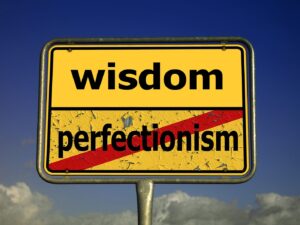
We live in a world that constantly bombards us with images and messages of what is considered perfect. Perfect bodies, perfect faces, perfect careers, perfect relationships, perfect lifestyles. We are told that we need to strive for perfection in everything we do and that anything less than perfect is unacceptable.
But is this really true? Is perfection the ultimate goal of life? Or is it a trap that prevents us from living authentically and joyfully?
So, why care about perfection at all? Let’s delve into this thought-provoking journey guided by the wisdom found in the intricate dance of nature.
The Myth of Perfection
Perfection is an illusion. It does not exist in nature or in reality. Everything in this universe has flaws, imperfections, and limitations. Even the most beautiful and awe-inspiring things have their own drawbacks and challenges.
Take the moon, for example. The moon is a symbol of romance, mystery, and inspiration. It lights up the night sky and influences the tides and seasons. But the moon is not perfect. It has craters, scars, and uneven surfaces. It waxes and wanes, sometimes hiding behind the earth or the clouds. It does not shine by itself, but reflects the light of the sun.
Or take the sea. The sea is a source of life, adventure, and wonder. It covers most of the planet and hosts a diversity of creatures and ecosystems. It offers us opportunities for exploration, recreation, and relaxation. But the sea is not perfect. It has saltiness, bitterness, and pollution. It has deep darkness, dangers, and mysteries. It can be calm or stormy, gentle or violent, depending on the weather and the mood.
Or take the sky. The sky is a canvas of infinite possibilities, colors, and shapes. It gives us air to breathe, space to fly, and stars to dream. It shows us the sunrise and the sunset, the rainbow and the aurora, the moon and the planets. But the sky is not perfect. It has clouds, fog, and smog. It can be clear or cloudy, sunny or rainy, bright or dark, depending on the time and the place.
The Beauty of Imperfection
The fact that these things are not perfect does not make them less beautiful or valuable. On the contrary, it makes them more special and unique. Their imperfections add character, depth, and charm to their beauty. Their imperfections make them real, relatable, and accessible to us.
The same is true for us humans. We are not perfect either. We have flaws, weaknesses, and limitations. We make mistakes, fail, and struggle. We have doubts, fears, and insecurities. We are not always happy, confident, or successful.
But that does not make us less beautiful or valuable either. On the contrary, it makes us more special and unique. Our imperfections add character, depth, and charm to our beauty. Our imperfections make us real, relatable, and accessible to others.
Beauty does not equate to perfection; it’s what makes things special.
The Freedom of Imperfection
If we accept this truth, we can free ourselves from the pressure and stress of trying to be perfect all the time. We can embrace our imperfections as part of who we are and what makes us different from others.
We can stop comparing ourselves to unrealistic standards and start appreciating ourselves for what we have and what we can do.
We can stop judging ourselves harshly and start loving ourselves unconditionally.
We can stop seeking approval from others and start following our own passions.
We can stop worrying about what might go wrong and start enjoying what is going right.
We can stop living in fear and start living in freedom.
Release the pursuit of ‘perfection’; embrace freedom and life!
Conclusion
So, let’s heed the wisdom of nature’s lessons. Let’s celebrate our craters, our saltiness, and our clouds. Let’s redefine beauty beyond perfection and realize that in our own unique way, we are someone’s special. As we release the notion of perfection, we embrace life’s richness and dive into the depths of our passions, guided by our own compass.
Embrace imperfection; it’s the gateway to authenticity. Beauty isn’t confined by perfection; it’s the brilliance that emerges from our genuine selves. So, let’s relinquish the pursuit of an unattainable ideal and embark on a journey of self-discovery, living life to the fullest without the need for external validation.
In the end, it’s the imperfections that make our lives extraordinary, and it’s in the embrace of our true selves that we find our greatest source of empowerment.
Futile Quest for Perfection!
Why chase perfection’s elusive quest,
When beauty’s found in what’s imperfectly dressed?
The moon, with craters, wears a celestial grace,
A reminder that flaw’s a unique embrace.
The sea, a mesmerizing tapestry of blue,
Yet salt and darkness reside within its view.
The sky stretches boundless, clouds may roam,
Still, its magnificence finds its way back home.
Beauty’s allure doesn’t perfection entail,
It’s the quirks and edges that make the tale.
Each woman’s a gem, special in her own right,
No need for perfection to shine through the night.
Release perfection’s chains, let freedom unfold,
Embrace passions and dreams, let your story be told.
No need for approval, just be your true you,
In the canvas of life, let your colors break through.
— S.J.
Unveiling Destiny: A Zen Tale of Confidence and Belief
In the midst of a fierce and pivotal battle, a Japanese general stood undeterred, his conviction unwavering even though his army stood vastly outnumbered. His soldiers, however, were plagued by uncertainty, questioning their chances of triumph. With the battlefield looming ahead, a moment of divine serendipity led them to a religious shrine, a sanctuary for their hopes and fears.
In the hushed aura of the shrine, the general, adorned in his armor, knelt alongside his men in fervent prayer. Their souls intertwined with the whispers of the wind, seeking reassurance amidst the impending chaos. It was a spiritual communion, an alliance of warriors and destiny.
As the ritual drew to a close, the general’s hand gravitated towards a coin – a simple token that would soon intertwine fate with courage. Holding it aloft, he declared, “I shall now toss this coin. Should it reveal heads, victory shall grace us. Should it unveil tails, defeat shall linger. Destiny’s wisdom shall soon unfurl.”
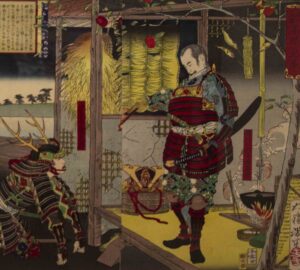
The coin soared, liberated from his grasp, suspended in the heavens for an ephemeral moment before gravity beckoned it downward. With bated breath, the men witnessed the coin’s descent, their hearts echoing its motion. Heads. Heads it was!
A euphoria surged through the ranks, igniting a flame of confidence that blazed within each warrior’s heart. Empowered by the coin’s decree, they advanced with renewed vigor, a torrent of unwavering determination. Their swords gleamed like stars against the night sky as they surged forward, their battle cries resounding in unison.
As the dust of combat began to settle, victory stood as a testament to their faith and perseverance. The enemy had been vanquished, their doubts obliterated by an unshakable resolve. In the wake of triumph, a lieutenant approached the general, his voice tinged with awe, “Truly, no force can alter destiny.”
The general’s eyes twinkled with an enigmatic gleam as he unveiled the coin, an emblem of profound insight. Heads, emblazoned on both sides. A revelation that destiny was not a mere toss of a coin but a reflection of the unyielding spirit that resided within them. The general’s quiet smile resonated with an understanding beyond words – destiny, an alliance of choice and belief.
Moral
This Zen tale echoes through time, encapsulating the essence of determination and the fusion of destiny and conviction. It’s a reminder that destiny is not an immutable force but a dance of choices, dreams, and unwavering faith. The coin’s two-sided truth illuminates that our beliefs can shape the very reality we embrace.
So, in the grand tapestry of existence, may we each hold a coin of our own – one side etched with courage, the other with unwavering belief. For in the end, it’s not destiny that moulds us but the resolute spirit that propels us forward.
Divine or Diabolic? Questioning Heaven and Hell

Imagine creating a realm crafted with intricacy, a world of breathtaking beauty where each detail is a masterpiece curated just for your enjoyment. Picture this grandeur, and now envision God creating an infernal pit with serpent-like flames awaiting you in hell. Does this God intend to cast you into its fiery abyss?
Consider the complexity of the brain, a marvel that enables you to ponder, question, and explore. Does God forbid your inquiries, snuffing out the spark of curiosity? Are you not entitled to probe the very nature of existence?
Within you, a treasure trove of creativity lies, with imaginative ideas that dance within your heart. Yet, is it truly divine to believe that exploring these artistic visions would bring down curses upon you?
You’re granted consciousness, a vessel to fathom the wonders of this universe in all its intensity. But are you then doomed to dwell in perpetual dread of post-life punishment?
Amidst a world teeming with splendours – vibrant sunsets, gentle rain, blooming flowers, succulent fruits, lush forests, mighty oceans, towering mountains, barren deserts, playful animals, melodious birds, and delicate butterflies – you’re surrounded by the symphony of creation. Is this symphony not a melody of benevolence, an ode to your existence?
Have you ever wondered whether the God you revere would impel you to regard this majestic reality as illusory, a mere figment of your imagination?
Consider this: while bestowed with the prowess to analyze and dissect, could it be that you’ve been blinded to the reality that the flames of ignorance have already engulfed you?
Over countless millennia, humans have sculpted magnificent tributes to their divine icons, etching devotion into the hardest rocks. Yet, does your divine God decree these masterpieces to be shattered into fragments?
In crafting the magnificent tapestry of life, humans emerge as one of the most remarkable threads. Yet, are we, in turn, mandated to extinguish these vibrant threads to appease the Creator?
The universe extends its boundless gifts – sunlight, rain, snow, flowers, fruits, forests, oceans, mountains, and creatures – an offering that fills our senses to the brim. This bounty is not bestowed to enforce submission but to affirm that within Earth’s hug, we find security and plenty.
Has the divine committed a sin in shaping humans who inadvertently cast it in a shadow? What if the compassionate deity you worship is but a guise for a sinister force?
How can a benevolent God condone the annihilation of life, a power only it possesses? If divinity embodies cruelty, selfishness, and narcissism, what then remains to distinguish the malevolent?
In your pursuit of power, have you created religions, inadvertently revealing your true face, one that aligns more with the Diabolic than the Divine?
Reflect on this, for it beckons us to ponder the intricate interplay between light and darkness, benevolence and malevolence, Religion and Non-Religion.
— Inspired by a discussion with “Ajju”
How to Tame Your Temper: A Zen Lesson

We all have moments when we lose our temper and say or do things that we regret later. Anger is a powerful emotion that can cloud our judgment and cause us to act impulsively. But is anger really a part of who we are, or is it something that we can control and overcome?
The Unseen Beast Within:
There is a Zen story that illustrates this point very well. It goes like this:
A Zen student came to Bankei, a famous Zen master, and complained: “Master, I have an uncontrollable temper. How can I cure it?”
“You have something very strange,” replied Bankei. “Let me see what you have. Can you show it to me now?”
“Just now, I cannot show it to you,” replied the other.
“When can you show it to me?” asked Bankei.
“It arises unexpectedly,” replied the student.
“Then,” concluded Bankei, “it must not be your own true nature. If it were, you could show it to me any time. You did not have it when you were born, and your parents did not give it to you. Think that over.”
This story teaches us a valuable lesson about anger and how to deal with it.
Bankei’s Profound Insight:
Bankei’s response holds the essence of the story’s moral lesson. He astutely observes that if the temper were indeed the student’s true nature, it would be something that he could reveal at any given moment. He draws attention to the fact that the temper does not align with the student’s innate essence, as it is not readily controllable or accessible. Bankei then takes the student through a logical journey: since the temper was absent at birth and not given by parents, it cannot be an inherent part of his true nature.
The Moral:
The story of the Zen student and Bankei impart a moral lesson that is universally applicable and profoundly insightful:
- Self-Reflection: The story prompts us to reflect on our own behaviour and emotions. Just as the student grappled with his temper, we all have aspects of ourselves that we wish to change or control. It encourages us to assess whether these aspects truly align with our core being or are merely transient traits.
- Distinctive Nature: The story highlights the notion that our true nature is fundamentally pure, serene, and untouched by negative emotions. Bankei’s reasoning underscores the idea that characteristics contradicting this inherent nature are learned or conditioned over time, and hence, they can be transformed.
- Impermanence of Emotions: This tale underscores the transient nature of emotions. By acknowledging that emotions like temper can arise unexpectedly, we realize that they are not a fixed part of us. They come and go, allowing us the opportunity to work towards cultivating positive qualities in their place.
- The Power of Choice: Bankei’s response empowers us to make conscious choices. The student’s inability to reveal his temper at will serves as a reminder that we possess the power to decide how we react to situations. Our true nature can guide us towards measured responses and emotional mastery.
Conclusion
The Zen story carries a profound moral that transcends time and culture. It compels us to confront our own inner struggles, question the authenticity of certain behaviours, and recognize the transformative power of our true nature. Bankei’s guidance teaches us that our core essence is inherently serene and tranquil, allowing us to master our emotions and journey towards a more harmonious existence. Just as the student left Bankei’s presence with renewed understanding, we too can embark on a path of self-discovery and self-improvement, armed with the knowledge that our true nature is resilient, compassionate, and ever-evolving.
Unveiling Corporate Chronicles: Harsh Bhat’s Book Reveals “Office Secrets” for Thriving in the Corporate Jungle

I vividly remember the first day I walked into an office more than 28 years ago, feeling both excited and naive. Fresh out of college, I was eager to conquer the challenges of the corporate world. Little did I know that the corporate jungle was unlike anything I had ever encountered before. Unprepared for the intricacies of office politics and the diverse personalities I would encounter, I soon realized that the corporate terrain demanded adaptability and resilience.
Looking back at my early days, I smile at my innocent approach, unaware of the ruthless competitiveness that awaited me. It was like navigating a dense forest where only the fittest could survive. As I began my journey in the corporate world, I learned that I had to be a wolf, lead the pack with confidence or risk becoming prey as a lamb.
Navigating the Jungle: Adapting to the Corporate Terrain
However, the corporate jungle was unforgiving, and I failed miserably, but I quickly learned that I needed to adapt and improvise to thrive. It was a world where changes were constant, and one had to stay relevant to be a part of the game.
Embracing Office Realities: A Candid Glimpse Behind Closed Doors
In “Office Secrets: 50 Human Truths You Should Absolutely Know,” Harish Bhat pulls back the curtain on the inner workings of offices worldwide. His insights into understanding colleagues and navigating the web of meetings proved invaluable in deciphering the corporate maze.
Wisdom for Leadership: Cultivating a Distinguished Managerial Approach
Having spent years in the corporate realm, Bhat’s guidance on leadership struck a chord with me. He encourages all corporate employees to make time for thoughtful contemplation amidst the constant action, to learn the power of saying “no,” and to communicate softly and effectively.
Embracing the New Age: Thriving in Digital Workplaces
Bhat delves into the recent trend of ‘work from home’ and discusses essential aspects like Zoom call etiquette, the value of small talk, and the significance of coffee breaks, even in virtual settings. Humor, according to him, always plays a vital role. He shares key habits of content managers, including the importance of a satisfying lunch break. Other habits involve preparing ahead for weekends, concise presentations, and knowing when to remain silent. Bhat even proposes that daydreaming can lead to solutions for challenging work problems. He emphasizes the usefulness of writing things down, as it clarifies thoughts, and encourages carrying a small notebook and pen at all times.
The Dickensian Characters of the Office: An Amusing Take on Colleagues
With a delightful touch of ironic humour, one of the most captivating chapters in the book explores characters straight out of a Charles Dickens story – the ones we encounter in most offices. There are those always craving more – more money, more budgets, more travel, and more perks. Smooth talkers who hardly work but easily get away with goofing off. The eternally optimistic souls and the perpetual killjoys. Those overly curious about others’ lives and the ones who never pay attention. Lastly, the experts at blaming others for their own failures. The descriptions are both amusing and relatable, as most of us can undoubtedly identify colleagues who fit some of these descriptions in just about any office.
Nuggets of Wisdom: Conclusion
The book covers a wide range of topics, from office dress codes and professional conduct to the art of generosity and building meaningful relationships. It offers valuable insights on problem-solving and finding the elusive work-life balance that suits each individual. Brimming with advice, suggestions, and nuggets of wisdom, this book is a valuable resource that many will find useful. Personally, I regret not having the opportunity to read this book when I began my career in the mid-1990s. Nonetheless, it’s never too late to gain the knowledge and wisdom it offers, making it a must-read for anyone looking to enhance their professional journey.