The Formula: Unraveling the Mysteries of the Divine

In the realm of the mystical and divine, words often fall short, and experiences transcend the boundaries of human expression. Such was the tale of the mystic who ventured to the sacred Mountain, seeking to comprehend the incomprehensible, to fathom the unfathomable – to understand God.
Upon his return, friends and seekers eagerly surrounded the mystic, their eyes filled with curiosity and anticipation. “Tell us,” they pleaded, “what God is like?” “Is He a Giant?” Some asked, “Does He look like us? Yet some others even asked, “Is God a male?” “A female?”
The mystic was confused. How could he possibly convey the profound revelation that had unfolded in the depths of his heart? How could the indescribable be confined within the limitations of language? How can he explain/describe the contrasting sweetness of Gulab Jamun and Jilebi (deserts of India)?
The mystic pondered this conundrum, knowing that any attempt to explain the inexplicable would only chip away at the majesty of the experience.
Still, the seekers persisted, yearning for a glimpse of the divine that had touched the mystic’s soul.
Faced with their unwavering desire to understand and in the hope that a few might be tempted to experience it for themselves, he reluctantly offered them a formula, “BEGINLESS and ENDLESS” – an imperfect representation of his profound encounter with the divine.
The formula emerged from the depths of the mystic’s soul like a faint echo of his spiritual revelation. It was not intended to encapsulate the essence of God but rather to serve as a pointer, a gentle nudge towards the ineffable truth that awaited those brave enough to embark on their own spiritual journey.
Yet, as human nature would have it, the formula was quickly seized upon by the seekers. They clung to it as if it were the very essence of divinity itself. The mystic watched, with a heavy heart, as his humble offering transformed into a sacred text, etched in stone and imposed on others as a rigid dogma.
In their zealousness, some took it upon themselves to spread this formula far and wide, crossing borders and oceans in their mission to share their newfound truth. It became a beacon of belief, and some even went to the extent of sacrificing their lives to defend it.
But the mystic knew that this was not what he had intended. He had hoped that his meagre offering would encourage others to seek their own spiritual experiences, to find their unique path towards understanding the divine. Instead, it had inadvertently become a barrier, limiting the vastness of God to a mere human construct.
As the formula spread, the mystic couldn’t help but feel a profound sadness. He wished he had remained silent, for the truth he had encountered was too grand to be confined by words or contained within the boundaries of human understanding.
Lesson
The lesson of the mystic’s tale is a poignant one. It reminds us that the mysteries of the universe cannot be adequately captured in words or encapsulated in rigid beliefs. Spirituality is not about adhering to dogmas or blindly following formulas but about embarking on a personal journey of discovery and connection with the divine.
Each of us carries the potential to experience the inexplicable, to encounter the divine in our own unique way. Instead of relying solely on the words of others, we should be brave enough to explore the uncharted territories of our hearts and souls, seeking the truth that resonates with our being.
Let us remember the mystic’s cautionary tale and let it inspire us to go beyond the confines of words and beliefs. In the pursuit of the divine, let us embrace the uncertainty, the vastness, and the unsayable, for it is within those realms that the true essence of spirituality resides.
Embracing Change: A Gardener’s Journey from Faith to Science

Once upon a time, in a world much different from ours, there lived an older woman who had a deep passion for gardening. She cultivated her little green haven with love and care, believing that her efforts were blessed by a higher power. The elderly gardener found solace in her faith, trusting that God controlled the weather and guided her crops to flourish. She scoffed at the idea of weather predictions by scientists, dismissing it as mere folly.
But life has a funny way of surprising even the most steadfast in their beliefs. One fateful summer, while the enthusiastic gardener was away on a long journey, a relentless drought struck the region. Nature’s merciless wrath spared none, and upon her return, the gardener was met with a devastating sight – her once-thriving garden had withered away, leaving behind a barren and desolate landscape.
In her heartbreak and dismay, the gardener’s faith in the divine intervention of weather wavered. She couldn’t reconcile the loss of her beloved garden with her belief in God’s benevolence. The question lingered in her mind: if God indeed controlled the weather, why would He allow such destruction to befall her sanctuary of greenery?
It was at this crossroads that the gardener’s journey took an unexpected turn. In her quest for answers and understanding, she decided to explore the realm of science, a domain she had long dismissed. With determination and curiosity, she delved into meteorology, learning about weather patterns, atmospheric conditions, and forecasting techniques.
As she absorbed the knowledge presented by scientists, a newfound appreciation for the precision and meticulousness of their methods began to blossom within her. She discovered that weather predictions were not just wild guesses but rather a culmination of decades of research, advanced technology, and an intricate understanding of the Earth’s complex systems. The more she learned, the more she marvelled at the sheer brilliance of human intellect and its ability to comprehend and predict the unpredictable.
Through this enlightening journey, the gardener’s perspective shifted. She realized that embracing science didn’t diminish her faith; rather, it enriched her understanding of the world and the forces that shaped it. She no longer saw science as a threat to her spiritual beliefs; instead, she saw it as a harmonious partner, offering insights into the wonders of creation.
Her garden, once a symbol of her unwavering faith in divine providence, now became a living testament to the marriage of faith and reason. Armed with both prayer and knowledge, she set out to rebuild her garden. This time, she planted with wisdom, factoring in weather forecasts and meteorological insights to ensure the optimal growth of her cherished plants.
As the seasons changed, her garden flourished like never before. The gardener found herself in awe of the delicate balance between science and spirituality. She understood that while she could anticipate weather conditions through science, the essence of life itself was still a mystery best left to the divine.
The gardener’s transformation garnered admiration and respect from her community. Her openness to change and willingness to challenge long-held beliefs inspired others to explore the world beyond their comfort zones. Through her story, people learned that evolution, whether in the garden or within oneself, is not a sign of weakness but a testament to the human spirit’s adaptability and thirst for knowledge.
Lesson:
In the end, the gardener taught us a valuable lesson: change is inevitable, and it is through change that we grow. Do not be a fanatic of old beliefs, and be prepared to shun falsehood as soon as you discover the truth. That is how we open ourselves to a world of endless possibilities and can coexist with nature in perfect harmony.
So, let us not judge the gardener for her initial beliefs, for we are all on a journey of discovery. Instead, let us celebrate her transformation and use her story as a reminder to be open to change, to question our assumptions, and to welcome the wonders of both the seen and the unseen in this vast tapestry of existence. After all, it is in embracing change that we truly come to understand the richness of life.
Voices of the Silent: The Tragic Plight of Animals in a World Unheard



Over one trillion animals are killed each year for human gain. But who tells their stories? In the midst of our bustling lives, surrounded by the incessant noise of progress and self-interest, the cries of innocent creatures go unnoticed, unheard, and ignored. Their suffering, their pain, and their struggle to survive in a world that seems to have forgotten them are hidden behind closed doors and in remote corners of the earth. Today, let us pause, let us open our hearts, and let us listen to the untold tales of these voiceless beings.
The Invisible Victims
While we, the dominant species, claim superiority over all living beings, we often overlook the heavy price paid by animals for our prosperity and comfort. Behind the closed doors of factory farms, millions of animals are confined in cramped spaces, robbed of their freedom, and subjected to unimaginable cruelty. They never feel the warmth of the sun on their backs or the gentle caress of a breeze. Their lives are a monotonous cycle of pain, fear, and despair. Their only purpose is to serve our insatiable appetite for consumption.

A Slaughterhouse of Compassion
Imagine the terror in the eyes of a cow as it faces its imminent end, sensing the danger in the air, smelling the bloodshed that precedes its own demise. Envision the desperation of a chicken packed in a cage; its wings clipped, and its dreams of flying forever shattered. These are not merely animals; they are living beings capable of feeling pain, fear, and love. Yet, their lives are reduced to mere numbers in the heartless machinery of mass slaughter.
From the Wild to the Brink of Extinction
It’s not just factory farming that poses a threat to animals. The relentless encroachment of human activity into natural habitats is pushing countless species to the brink of extinction. Majestic creatures like elephants, tigers, and rhinos face an existential crisis as their homes are destroyed and their families torn apart. Each animal lost is like a piece of our collective soul vanishing forever, and the consequences of this devastation will haunt future generations.
The Impact on Ecosystems
We may feel disconnected from the lives of animals, but the truth is that their existence is intricately woven into the fabric of our ecosystems. When we take away one thread, the entire tapestry unravels. The disappearance of key animal species disrupts the delicate balance of nature, leading to ecological imbalances and a ripple effect that affects us all. The consequences of our actions, no matter how distant they may seem, eventually find their way back to our doorstep.
A Call for Empathy and Change
In this cacophony of chaos, we must find it in our hearts to stand up and be the voice for the voiceless. We must refuse to be a part of a system that thrives on suffering and destruction. We must challenge the status quo and demand change in the way we treat animals. By adopting a more compassionate lifestyle, we can choose to support cruelty-free alternatives, advocate for stricter animal welfare laws, and promote conservation efforts that protect our endangered species.
Conclusion
In a world dominated by human desires and ambitions, it is all too easy to turn a blind eye to the suffering of animals. But we must not forget that our survival is intricately tied to the well-being of all living beings sharing this planet with us. We are the storytellers, the chroniclers of history, and it is our solemn duty to give a voice to those who cannot speak for themselves.
Let us remember that empathy knows no bounds and that compassion knows no species. Let us be the champions of change, the guardians of the innocent, and the hope for a better world where the plight of animals is acknowledged and their stories are finally told. Together, let us forge a future where every life, no matter how small or insignificant, is valued and respected.
Unveiling the Essence of Religion: Understanding the Eternal Laws

Introduction
Religion, a profound aspect of human existence, holds diverse interpretations. It is not merely about eradicating faith but rather about liberating it from deceitful practices. Scientists, despite differing opinions, unanimously agree on the eternal nature of natural laws, forming the foundation of scientific exploration. These laws are believed to remain constant, providing a guiding principle for all human thought.
The Role of Natural Laws
Science relies on the steadfastness of natural laws, without which it would cease to exist. The assumption that the laws governing nature remain consistent forms the basis of scientific research. This implies that if we abandon the belief in the eternal nature of these laws, any inference about the past, future, or even the present becomes meaningless.
Take, for instance, the law of composition of water expressed by the chemical formula H2, O. This holds good in the case of all waters, whether examined today or ten thousand years ago. The water is taken from the Ganges or the Thames today or from the Jordan two thousand years ago and submits to the same law. A triangle in the time of Euclid was not a jot different from its cousins handled by a schoolboy today. The nature of laws was the same in the time of Aryabhatta, Pythagoras, Plato or Newton, and it is as certain as anything that it will ever remain the same.
Human Laws
Human laws, unlike those governing humanity, are man-made regulations designed for societal harmony. By human laws, I mean not the laws that govern humanity but the laws that man has enacted for himself or others from time to time. They align with the laws of nature since they cannot violate them. If humans were mere instruments of nature, concepts like right or wrong, success or failure would lose their significance, as they imply striving towards goals, which in turn requires intent. Serving humanity is distinct from worshipping it, emphasizing the importance of maintaining this distinction.

Perception of God
Some argue that humans have fashioned God in their own image, and there is some reasoning behind this claim. While humans possess limitations, attributing similar qualities to God is a common tendency. Nonetheless, individuals should recognize their own limitations and acknowledge the existence of an eternal, uncreated soul that transcends physical matter.
The Purpose of Creation
Determining the purpose behind God’s creation presents a challenging question. Is it to benefit those created by God or beings that exist independently? Does it aim to perfect imperfect beings created by God or those who are inherently flawed? Lastly, could it be an opportunity for God to perfect Himself, assuming He is imperfect? If so, who possesses the ability to perfect Him?
Understanding Plurality and Illusions
While illusions can momentarily affect our perception, claiming that everything is an illusion is an unconvincing assertion. Creation always emerges from preexisting elements, and the concept of plurality forms the basis of mathematics. Attempts have been made to explain the relationship between spirit and matter, yet a comprehensive understanding remains elusive.
God’s Role in Love and Choice
A god devoid of love and impartial to creation would be weak. The presence of love in relationships, such as that between a mother and child, demonstrates strength. God is not the creator of sin or pain; they are the consequences of human weakness and ignorance, not divine flaws.
The Significance of Freedom
Freedom of action is a cherished blessing, while restrictions on freedom are considered a curse. A perfect world devoid of any challenges would diminish the souls’ sense of purpose and freedom. Theologians have often overlooked the importance of souls, focusing excessively on the omnipotence of God.
Eradicating Superstition
Superstitions, lacking a factual basis, tarnish the essence of religion. Eliminating these superstitions is crucial. Instances of misguided devotion, such as devotees attacking street musicians after leaving mosques, highlight the need for a more enlightened understanding of religious practices.
Prayer as Oneness with the Divine
Prayer, epitomized by the Sanskrit term “Sandhya,” signifies the coming together or at-one-ment. Genuine prayer involves more than mere lip service; it connects the soul with cosmic power, realizing the inseparable bond with the greater universe. The objective is to internalize this unity, transcending superficial motions.
The Bottomline
Religion holds profound significance in the lives of individuals. Understanding the eternal nature of natural laws and the role of religion in fostering harmony and spiritual growth allows us to deepen our connection with the divine. Embracing a rational and inclusive perspective while discarding superstitions will enable us to unlock the true essence of religion, finding solace and purpose in our journey towards realizing our unity with cosmic power.
—Inspired by a book, “Reason and Religion”, by Pt. Ganga Prasad Upadhyay
— By Sanjay Shukla
Manikarnika Ghat in Varanasi – Where Entire Cycle of Life and Death is Played




Kashi, Banaras, or Varanasi has been one of my favourite places to visit. I always manage to find a perfect serenity in the midst of all the chaos of this spiritual city of India, something that is hard to find. I can simply spend hours in the ghats of Varanasi seeing the city come alive before me.
I visited Varanasi after 20 years (the first time was in 2003). Those were fond memories and it pulled me back to this city again. This time the cacophony, chatter, and fun at the Ghats made the long walks along the ghats immensely enjoyable. To me, Varanasi is always the place of Vishwanath Gali (a narrow alley), Vishwanath Mandir, and the famous Dashashwanedh Ghat.
Did you know that there are 87 ghats in Varanasi? (Check the Map of Ghats in Varanasi below)

The Varanasi Ghats (or riverfronts) bore the sign of the cycle of life and death that played every day beside the holy Ganges River. After all, Varanasi is one of the oldest continuingly inhabited cities in the world. Varanasi is one of the holiest cities for the Hindus, the city of enlightenment. As per some Hindu Shashtr’ (religious texts), dying at Kashi (or Varanasi) will give you Nirvana. Every day hundreds of dead bodies are burnt at the Varanasi Ghats, keeping the faith of the people alive.

Manikarnika Ghat
Manikarnika Ghat is the main cremation ghat in Varanasi. It also happens to be one of the oldest and most sacred Varanasi Ghats. Like most of the famous Ghats, Manikarnika Ghat is also full of stories and legends.
Today I will take you on a journey to Manikarnika Ghat in Varanasi, where life and death converge in a mesmerizing dance that has captivated hearts for centuries.
As I arrived at Manikarnika Ghat, I was immediately engulfed by a profound sense of reverence and awe. The air was thick with ancient traditions and the whispers of countless stories.

I gazed at the mighty Ganges, her waters flowing relentlessly, carrying the hopes, dreams, and sorrows of humanity. The river, they say, holds the power to cleanse the soul and grant liberation from the cycle of life and death.
I watched as pilgrims, adorned in vibrant hues, made their way down the stone steps with purpose and devotion. They came from all corners of the world, seeking solace, seeking salvation.
Intrigued, I followed their lead and stepped into the heart of Manikarnika Ghat. The air was heavy with the scent of incense and the lingering essence of sacred rituals. I could feel the weight of centuries pressing upon me.
And there, amidst the chaos and the serenity, I witnessed the eternal dance of life and death. Bodies, wrapped in white shrouds, were carried upon bamboo stretchers, their final journey to liberation. Flames licked the pyres, consuming mortal remains, merging them with the elements.
Amidst the heat and smoke, the cries of mourning and the chants of prayers filled the air. Tears and laughter blended together, for here, death was not merely an end but a passage to a higher realm.

In the midst of this profound spectacle, I found myself contemplating the fragility of existence. How fleeting our time on Earth, how precious each breath. Manikarnika Ghat reminded me of the inevitability of our mortality, urging me to cherish every moment with purpose and gratitude.
As the hours slipped away, I observed the ebb and flow of life at the ghat. It was a symphony of emotions, a tapestry woven with threads of sorrow and hope, grief and acceptance. The cycle of life and death played out before my very eyes.
And as I bid farewell to Manikarnika Ghat, my heart heavy with the weight of the experience, I couldn’t help but carry with me a newfound appreciation for the delicate dance between life and death. A dance that continues unceasingly, reminding us of our shared humanity and the importance of living fully in the face of impermanence.
So, dear friends, should you ever find yourself at Manikarnika Ghat, immerse yourself in the enigmatic tapestry of existence. Listen to the whispers of the past, embrace the present, and let the timeless dance of life and death leave an indelible mark upon your soul.
Cosmic Comedy: Discover the Lighter Side of Astrology!
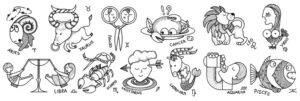
Hey there, cosmic crusaders and zodiac enthusiasts! Today, we’re diving into the whimsical world of astrology, where the alignment of celestial bodies determines everything from our personalities to our love lives. Brace yourselves for a cosmic comedy show as we explore the quirks and quibbles of the zodiac. Buckle up because we’re about to take a wild ride through the cosmos!
- ARIES: The Energetic Ram Who’s Always in a Hurry
Aries, the fiery ram, is known for their boundless energy and unstoppable enthusiasm. They’re like the Energizer Bunny on steroids! It’s like they’ve had one too many cups of coffee, and their impatience can be both hilarious and exhausting. They start a million projects at once, only to leave them unfinished like a trail of cosmic breadcrumbs.
- TAURUS: The Stubborn Bull Who’d Rather Netflix and Chill
Ah, Taurus, the bull with a stubborn streak as wide as the Milky Way. These earthy beings are known for their love of the good life and a strong aversion to change. Getting a Taurus out of their cozy sanctuary can be harder than finding Waldo in a galaxy of stars. But hey, once you’ve got them out, they’ll be your most loyal companions!
- GEMINI: The Social Butterflies on Steroids
Gemini, the twins of the zodiac, are notorious for their split personalities. One moment, they’re the life of the party, and the next, they’ve vanished into thin air like a magician’s trick. Trying to keep up with these social butterflies is like playing hide-and-seek with a chameleon—just when you think you’ve caught them, poof! They’re off to another party.
- CANCER: The Emotional Crabs Who Hide in Their Shells
Cancer, the emotional water sign, is like a rollercoaster ride through an ocean of feelings. These sensitive souls retreat into their shells at the drop of a hat. They can go from sobbing over a sad movie to giggling at a bad joke in the blink of an eye. Just make sure you have a box of tissues and a clown nose on hand when you’re hanging out with them!
- LEO: The Kings and Queens of Drama
Ah, Leo, the majestic lion ruling the cosmic jungle with its fiery manes and dramatic roars. They love being the center of attention and have a knack for turning everyday situations into grand spectacles. They’ll make a simple trip to the grocery store feel like a royal procession, complete with paparazzi and confetti. Grab your popcorn, folks—it’s showtime!
- VIRGO: The Perfectionist Party Poopers
Virgos, the meticulous perfectionists of the zodiac, have an eye for detail that would make Sherlock Holmes proud. They’ll analyze every situation, leaving no stone unturned and no sock unmatched. But beware, their perfectionism can sometimes drain the fun out of any gathering. They’ll be the ones organizing your party, making sure every napkin is folded at a precise 90-degree angle.
- LIBRA: The Indecisive Diplomats
Libras, the cosmic peacemakers, are known for their indecisiveness. Choosing between Idli or Dosa; Paratha or Roti; Pulau or Biryani can be an existential crisis for them, leading to a never-ending debate that could rival a UN summit. Don’t be surprised if they ask for a second opinion from every passerby, from the grocery store cashier to the neighborhood cat. Just remember, patience is key when hanging out with these scales of indecision.
- SCORPIO: The Mysterious Detectives
Scorpios, the enigmatic detectives of the zodiac, have a knack for uncovering secrets and digging into the depths of the unknown. They’re like cosmic Sherlocks with a dash of James Bond charm. Their intensity is so powerful that they can make a simple trip to the grocery store feel like a covert operation. Don’t be surprised if they whip out a magnifying glass to examine the expiration dates on every item in their shopping cart!
- SAGITTARIUS: The Wanderlust Adventurers
Sagittarius, the restless wanderers, are on a perpetual quest for adventure and new experiences. They’re like cosmic nomads with an insatiable appetite for exploration. The mere thought of being confined to a routine sends shivers down their spines. Their travel bucket list is longer than the Great Wall of China, and they’ll spontaneously book a flight to a remote island just because they saw a pretty picture on Instagram. Bon voyage, Sagittarius!
- CAPRICORN: The Ambitious Go-Getters
Capricorns, the ambitious workaholics of the zodiac, are like cosmic CEOs with a briefcase full of determination. They treat life like a never-ending business meeting and have their eyes on the prize at all times. Their calendars are colour-coded, and their to-do lists could rival the length of a Tolstoy novel. Don’t be surprised if they schedule a five-minute break to eat lunch and simultaneously make a million-dollar deal.
- AQUARIUS: The Eccentric Visionaries
Aquarius, the quirky visionaries, are like cosmic inventors with a touch of eccentricity. They’re always a step ahead, living in a world where logic and creativity dance together. Their minds are like kaleidoscopes, spinning with unconventional ideas and innovative solutions. Don’t be shocked if they show up to a formal event wearing a top hat and mismatched socks—it’s all part of their eccentric charm.
- PISCES: The Dreamy Artists Who Can Get Lost in Their Own Imagination
Pisces, the dreamy artists of the zodiac, have a deep connection with the ethereal realms of creativity and imagination. They’re like cosmic painters, using emotions and dreams as their brushes. Their heads are often in the clouds, and reality can sometimes feel like a distant concept to them. They’ll get lost in their own thoughts during a conversation, only to snap back with a profound insight that leaves everyone wondering, “Where did that come from?”
So there you have it, fellow starry-eyed readers—our cosmic comedy tour through the zodiac. Astrology is not just about predictions and personality traits; it’s a cosmic playground where hilarity and unpredictability reign supreme. So whether you’re a fiery Aries, a dreamy Pisces, or anything in between, embrace your quirks, laugh at your cosmic antics, and let the stars guide you on this cosmic rollercoaster called life!
Until next time, keep your telescopes polished and your laughter celestial! Stay cosmically comical, my friends!
- By Sanjay Shukla
The Power of Letting Go: Move forward and be at peace
Are you feeling stuck in the past, unable to move forward and find peace? Letting go can be a challenging but rewarding process that allows us to release negative emotions and experiences. It’s time to practice mindfulness, write it out, seek support, create new experiences and show yourself some self-compassion. In this blog post, we’ll explore why letting go is difficult yet beneficial, as well as provide exercises to help you let go and embrace your future with open arms. So take a deep breath and get ready for a journey towards inner peace – because the power of letting go will change your life!
Why is it difficult to let go?
Letting go is one of the most challenging things we can do in life. It’s difficult because it requires us to confront our emotions head-on and face uncomfortable truths about ourselves and our past experiences.
One reason why letting go is hard is that we often attach ourselves to negative memories and emotions, as if holding onto them will somehow change what happened or make things better. But the truth is that clinging to these feelings only prolongs our suffering and prevents us from moving forward.
Another reason why letting go can be difficult is fear – fear of the unknown, fear of failure, and even fear of success. We may hold onto familiar patterns or relationships simply because they are comfortable, even though they no longer serve us.
Additionally, societal expectations can also make it challenging for us to let go. We’re taught early on that being strong means not showing vulnerability or admitting defeat. This mindset can lead us to hold onto situations that are toxic or harmful because we feel like giving up would mean weakness.
There are a multitude of reasons why letting go can be so difficult – from attachment to negative emotions and fear of the unknown to societal pressures – but recognizing these obstacles is an important step towards overcoming them.
What are the benefits of letting go?
The act of letting go can be difficult, but it is also incredibly beneficial for our overall well-being. When we hold onto past hurts, grudges or negative emotions, we carry them with us and they can impact our mental and physical health.
One benefit of letting go is that it frees up space in our minds to focus on the present moment. By releasing the past, we allow ourselves to fully engage in the present and make new memories without being weighed down by old ones.
Letting go can also lead to a sense of inner peace. When we forgive others or release anger towards them, we no longer feel burdened by resentment. This allows us to cultivate feelings of compassion and empathy towards ourselves and others.
Another benefit is that letting go can improve relationships. When we let go of control or expectations in a relationship, it allows space for growth and understanding between both parties. It also helps us communicate more effectively as there are fewer hidden resentments or unspoken grievances.
The benefits of letting go are numerous – from improving mental health to fostering stronger relationships. It may be challenging at first but practicing mindfulness techniques like meditation or journaling can help facilitate this process over time.
How to let go
Letting go can be challenging, but it is essential for personal growth and peace of mind. Here are some ways to help you let go:
Practice mindfulness: Mindfulness involves being present in the moment without judgment. When you practice mindfulness, you become aware of your emotions and thoughts without getting caught up in them.
Write it out: Writing down your feelings and thoughts can be an effective way to release them from your mind. You don’t have to share what you write with anyone; just writing it down can help you process and let go.
Seek support: Talking about our struggles with someone we trust can be helpful. Whether it’s a friend, family member, or therapist, having someone else listen and offer perspective can make a big difference.
Create new experiences: Trying something new or doing something differently than usual can help break old patterns and bring fresh perspectives. Exploring new hobbies or taking a trip somewhere different are excellent ways to create new experiences.
Self-compassion: Be kind to yourself during the letting-go process. Remember that change takes time, so don’t expect everything to happen overnight. Practice self-care techniques like meditation or yoga as well.
Incorporating these tips into your life may not make letting go easy overnight. However, over time they will start helping with the transition towards finding inner peace through letting go of past circumstances that no longer serve us today!
Letting go exercises
Letting go can be a challenging but rewarding process that requires practice and patience. If you find yourself struggling to let go of negative emotions, beliefs or memories, then trying some letting-go exercises might help. Here are some simple yet effective exercises you can try:
1) Write it out: Take a pen and paper, and write down everything that’s bothering you. Then tear the paper into tiny pieces as a symbolic gesture of releasing those thoughts.
2) Practice mindfulness: Sit in a quiet place, close your eyes and focus on your breath. As thoughts come up, acknowledge them without judgment and let them drift away like clouds.
3) Seek support: Talk to someone whom you trust about how you’re feeling. It could be a friend, family member or therapist who can offer guidance and empathy.
4) Create new experiences: Do something new that challenges your comfort zone like taking up a hobby or traveling somewhere unfamiliar.
5) Self-compassion: Be kind to yourself by acknowledging that it’s okay to feel what you’re feeling. Offer yourself words of encouragement such as “I’m doing my best” or “I am worthy”.
Remember that letting go is not an overnight process but rather a journey towards inner peace and healing.
Conclusion
Letting go can be a challenging but rewarding process. It takes time and effort to release the things that are holding us back, but doing so can help us move forward in life with more peace and happiness.
By practising mindfulness, writing it out, seeking support, creating new experiences, and showing self-compassion, we can learn how to let go of negative thoughts and emotions. We may not be able to control everything that happens in our lives, but we can control how we react to it.
Remember that letting go is not a one-time event; it’s an ongoing process. Be patient with yourself as you work through your own challenges and setbacks. With practice and determination, you’ll find yourself feeling lighter and more accessible than ever before.
So take some time today to reflect on what you need to let go of to move forward. You have the power within you – all you need is the courage to let go!
Creating Engaging Ad Copies with AI for Copywriters

Are you a copywriter struggling to come up with new and creative ad copies? Do you find yourself constantly hitting writer’s block and running out of ideas? Well, fear not because Generative AI is here to revolutionize the way we create content. With its ability to generate human-like responses, it’s no wonder that more and more copywriters are turning towards Generative AI (Artificial Intelligence) tools for their writing needs.
In this blog post, I explore the top 5 best Generative AI tools for copywriters to create amazing ad copies.
What is Generative AI?
Generative AI, also known as artificial intelligence, is a subset of machine learning that involves the use of algorithms to generate new content. Unlike traditional AI systems that are limited to pre-programmed responses, generative AI tools can create unique and human-like responses.
Generative AI works by analyzing large amounts of data and identifying patterns within it. It then uses these patterns to generate new content based on the input given. This means that with just a few prompts or keywords, generative AI can create entire paragraphs or even pages of text.
One major advantage of using generative AI for copywriting is its ability to save time and increase productivity. With generative AI tools, copywriters no longer have to spend hours brainstorming ideas or researching topics. Instead, they can simply input their requirements into the tool and let it do the rest.
Another benefit of using generative AI for copywriting is its potential for creativity. While some may argue that machines cannot be truly creative like humans, others believe that generative AI has the potential to come up with ideas and concepts that would never occur to a human mind.
Generative AI offers exciting possibilities for revolutionizing how we approach creative writing tasks such as ad copies. Its ability to analyze data quickly while generating fresh content makes it an indispensable tool in today’s fast-paced digital world.
What are the benefits of using Generative AI for copywriting?
There are several benefits to using Generative AI for copywriting. The following are some of the benefits:
- Grammar and Spelling Check: It can help copywriters with a quick review of their content for any spelling or grammatical errors. This will ensure that the final output is error-free and looks professional.
- Helps in Brainstorm and Saves Time: it can save a lot of time and effort that would have otherwise been spent brainstorming and creating content from scratch. With Generative AI tools, copywriters can generate multiple variations of ad copies in just a matter of minutes. Moreover, these tools utilize advanced algorithms and machine learning techniques to analyze the market trends and consumer behavior patterns. This allows them to create more targeted and personalized ad copies that resonate well with the target audience.
- Eliminates writer’s block: Another benefit is that Generative AI helps eliminate writer’s block by providing fresh ideas and perspectives for copywriters. It also enables them to experiment with different tones, styles, and formats without having to start from scratch each time.
- Keyword optimization: Generative AI can help with keyword selection and optimization. By providing the most effective keywords that are relevant to the content, copywriters can optimize their content for better search engine rankings.
- Summarization and paraphrasing: Generative AI also helps summarize a lengthy piece of content or paraphrase it. It can provide a summary of any document, as well as paraphrase content in a way that is easy to read and understand.
- Consistent brand communications: Additionally, the use of Generative AI can lead to consistent branding since all generated content adheres to pre-established guidelines established by companies or brands. This way, there is no risk of deviation from brand voice or messaging style as every output aligns with company values.
The benefits of using Generative AI for copywriting are evident – saving time while producing high-quality marketing materials at scale while consistently reflecting company values through adherence to predefined rules is only some aspect where this technology excels.
What are the best Generative AI tools available?
Generative AI tools are becoming increasingly popular among copywriters who want to create better ad copies. There are many Generative AI tools available today that can help copywriters generate highly creative and compelling content with minimal effort. Some of the best Generative AI tools available include
- ChatGPT: ChatGPT is one of the most popular Generative AI tools used by copywriters today. This tool uses natural language processing (NLP) to generate human-like text based on prompts given by users.
- Copy.ai: Copy.ai is another powerful tool that offers various features, such as generating headlines, product descriptions, social media posts, and more. The platform also allows you to input your own brand voice and tone for more personalized results.
- Writesonic: Writesonic is a great option for those looking for an all-in-one solution that offers everything from blog post writing to email marketing campaigns.
- Conversion.ai: Conversion.ai has a suite of features, including creating landing pages or videos.
- ShortlyAI: This tool specializes in summarizing long-form content into shorter formats like tweets or captions
- Bing AI: This new platform can help copywriters with searches, rewrite their texts, and respond to your requests via chat
These AI platforms have revolutionized how we approach writing ad copies saving time giving ideas which would otherwise be difficult if not impossible without using them
How to use Generative AI tools to create better Ad copies?
Generative AI tools can help copywriters create better ad copies by providing them with unique and creative ideas. Here are some tips on how to use Generative AI tools effectively:
- Understand your target audience: Before using Generative AI tools, it’s important to understand the demographics of your target audience. This will help you tailor your ad copies accordingly.
- Use relevant keywords: To create effective ad copies, you need to use relevant keywords that resonate with your target audience. Generative AI tools can suggest appropriate keywords based on your product or service.
- Experiment with different templates: Most Generative AI platforms offer a variety of templates for creating ad copies such as headlines, descriptions and CTAs (Call-to-Actions). Experimenting with these templates can give you new ideas for writing engaging ads.
- Refine the generated content: While the output from generative AI may not always be perfect, it is often a great starting point for refining and improving the final version of an ad copy.
- Use chatbots for customer engagement: Chatbots powered by Generative AI can be used to engage customers in real-time by providing personalized responses that drive conversions.
By following these tips, copywriters can leverage the power of Generative AI to generate compelling ad copies that drive more traffic and ultimately increase sales!
Conclusion
To sum up, Generative AI tools are revolutionizing the way copywriters create ad copies. With their ability to generate high-quality content quickly and efficiently, they are becoming an essential asset for businesses looking to boost their advertising campaigns.
From GPT-3 by OpenAI to Bing’s Turing Natural Language Generation, there is no shortage of options available in the market. Each tool has its unique features and functionalities that cater to different requirements.
By using Generative AI tools effectively, copywriters can create compelling and engaging ad copies that capture the audience’s attention and drive results. However, it is important to remember that these tools should be used as a supplement rather than a replacement for human creativity and expertise.
In conclusion, incorporating Generative AI into your copywriting process can significantly increase productivity while maintaining quality standards. It’s time for marketers and businesses alike to embrace this technology and witness the benefits firsthand!
Why Every Desk Worker Needs to Move More, And How To Do It At work
The Hidden Risks of Prolonged Sitting and How to Combat Them
Are you glued to your desk for eight hours a day? Do you find yourself feeling stiff and sluggish by the end of the workday? If so, it’s time to add some movement to your routine! Sitting at a desk all day can have serious health consequences. But don’t worry – there are simple ways to incorporate more activity into your workday.
In this post, we’ll explore why it’s crucial for desk jockeys to move more and how you can do it without leaving the office. Get ready to energize your body and mind with our tips on staying active during those long days at work!
The Danger of Prolonged Sitting
Sitting for prolonged periods of time has been linked to a host of health problems, including obesity, type 2 diabetes, cardiovascular disease, and cancer. Even if you’re diligent about getting exercise outside of work, spending the majority of your day sitting down can still have negative consequences for your health.
What Are the Risks?
There are a few reasons why sitting is so dangerous to our health. First, when we sit, we burn fewer calories than when we stand or move around. This can lead to weight gain over time. In addition, sitting at a desk all day weakens your muscles and your posture can suffer thus putting you at risk for developing musculoskeletal problems like pain in the back, neck, and shoulders. It can also cause headaches. You might even feel sleepy or have trouble concentrating.
And finally, research has shown that extended periods of sitting can lead to changes in our metabolism that increase our risk for chronic diseases like type 2 diabetes and cardiovascular disease.
All of these risks are increased when you don’t take breaks to move around and get your blood flowing. That’s why it’s important to make time for movement throughout the day, even if you have a sedentary job.
So what can you do to combat the dangers of prolonged sitting?
First, make sure that you’re moving around regularly throughout the day. Set a goal to get up and walk around for at least 5 minutes every hour. You can also try standing while you work, or using a standing desk or height-adjustable desk. And finally, be sure to exercise regularly outside of work – this will help offset the negative effects of sitting during the day.
Tips for Desk Workers to Get Moving
Sitting at a desk all day can take a toll on your body, but there are ways to combat the effects of a sedentary lifestyle. Here are some movement and posture hacks to get moving and fight fatigue at work:
- Get up and move every hour. Try setting a timer or alarm to remind yourself to stand up and walk around for a few minutes every hour. This will help increase your circulation and reduce the risk of sitting for long periods of time.
- Posture matters: Poor posture puts unnecessary strain on your body which can lead to fatigue. Make sure you’re sitting up straight with your shoulders back and your monitor at eye level to avoid this.
- Take regular breaks. In addition to standing up and moving every hour, be sure to take regular breaks throughout the day to stretch or walk around. This will help you stay loose and avoid stiffness from sitting in one position for too long.
- Use a standing desk or sit-stand workstation. If possible, invest in a standing desk or sit-stand workstation that allows you to alternate between sitting and standing throughout the day. This can help reduce the risk of back pain or other issues associated with sitting for long periods of time.
- Get active during your lunch break. Instead of sitting down to eat lunch, try going for a walk or even doing a quick workout during your lunch break. This will help you get some activity in during the day and improve your overall energy levels.
- Make small changes throughout the day. Even if you can’t stand up and move around every hour, there are still small changes you can make throughout the day to improve your movement habits.
Brief Exercise Regimes Specifically For Desk Workers
If you’re reading this, chances are you spend a lot of time sitting at a desk. And while sitting isn’t necessarily bad for you, it can lead to a host of health problems if you don’t counter it with regular movement. That’s why experts say that every desk worker needs to move more throughout the day. And one way to do that is by taking regular breaks to do some quick and easy exercises.
If you’re like most desk workers, you probably sit for most of the day. Here are a few ideas for exercises that are specifically designed for desk workers:
- Neck Rolls: Start by sitting up straight in your chair with your shoulders relaxed. Slowly roll your head from side to side, letting your chin drop towards your chest on each roll. Repeat for 10-20 reps.
- Shoulder Shrugs: Raise your shoulders up towards your ears, then release them back down again. Repeat for 10-20 reps.
- Desk Push-Ups: Place your hands on the edge of your desk and push away from it, keeping your body in a straight line from head to toe. If this is too difficult, start with modified push-ups on your knees instead of toes. Repeat for 10-20 reps.
- Chair squats: With your feet shoulder-width apart and planted firmly on the ground, lower your butt toward your chair until your thighs are parallel with the ground. Then stand back up. Repeat 10-15 times.
- Leg lifts: Sit up straight in your chair and extend one leg out in front of you, keeping your foot flexed. Slowly lift your leg as high as you can without moving your upper body or rocking in your chair. Lower back down and repeat 10 times before switching legs.
- Triceps dips: Place your hands on the edge of your desk, fingers pointing toward your body. Straighten your arms and lift yourself off the ground until just your heels touch the ground. Then bend your elbows to lower yourself back down. Repeat 10-15 times
Office Furniture Recommendations to Facilitate Movement
When you’re stuck at a desk all day, it’s easy to fall into the trap of being sedentary. Moving around can improve your focus and energy levels, and help reduce stress. One way to make it easier to move more at work is to choose the right office furniture. Here are some recommendations:
- Get a standing desk or adjustable desk. Standing desks are becoming more popular as people learn about the health benefits of standing more during the day. If you can’t get a standing desk, an adjustable desk that lets you raise and lower the height of your computer screen is also a good option.
- Make sure your chair is comfortable and supportive. You’re going to be sitting in it for long periods of time, so it’s important to have a chair that doesn’t cause pain or discomfort. Look for a chair with good back support and adjustable settings so you can find the perfect position.
- Invest in a quality footrest. If you spend a lot of time sitting at your desk, your feet can start to feel uncomfortable after awhile. A footrest can help take the pressure off your feet and improve circulation.
- Consider using a laptop stand or monitor riser. Working on a laptop can put strain on your neck and shoulders if you have to look
Conclusion
Moving more is essential for desk workers, as it offers significant overall health benefits. Taking regular breaks from your desk and using those times to move around is the simplest way to get started—set a timer or an alarm on your phone if necessary. Doing seated stretching exercises can further improve your strength, flexibility and posture at work, whereas taking a stroll outside during lunchtime will let you fully disconnect from work-related duties. Keeping active as much as possible also encourages better sleep quality and improved mental clarity throughout the day.
Equality is a Silly Concept!

Equality is a Silly Concept!
Yes! You’ve read it right.
Equality is a silly concept, probably borrowed from the West.
Nature itself is a testament to this, with its incredible diversity. If nature had equality, we would probably only have one type of tree, one type of shrub, and one type of grass.
Humans are no different. We are all unique and different from each other. No two humans are the same, so what does equality even mean?
I’m tired of hearing about equality all the time. Well, let me tell you, enforcing equality is the best way to exterminate a species!
In this blog post, we’re going to explore why the idea of equality is flawed and why striving for it can actually do more harm than good.
So buckle up and get ready to challenge your preconceptions about what true fairness really means.
What does it even mean to be equal?
“Equality: When everyone puts in the same effort, gets the same results.”
Equal opportunity, sure. But what about equal results?
The concept of equality is often used to refer to the idea that all people are equal in spite of their differences. But, does it even exist?
How does the concept of equality work here?
It is impossible to have everyone on the same level, no matter how hard you try. Equality can never be achieved, as no two people are the same.
In a world where everyone is different, this is impossible. We are all unique and have different talents, strengths, and weaknesses. We all have different backgrounds and experiences.
You may be interested in becoming a doctor, but I prefer to develop my skills as a mason or an artisan.
How does the concept of equality work here? We are all born with different skills and interests. To each their own.
In addition, equality is relative. What may be equal for one person may not be equal for another. For example, two people may both have the same job, but if one makes more money than the other, they are not truly equal.
Also, I may have a hunger for two Rotis, while my twin brother satiates his hunger with four Rotis (Indian bread). Serving both of us, three Rotis in the name of equality is a gross injustice.
Equality is also an unrealistic goal. We should all strive for fairness and justice in our society instead.
Conclusion
In conclusion, I agree, equality is an important concept that should not be dismissed as it stands for the fundamental right of everyone to be treated with respect and dignity, regardless of their gender, race, or any other factor.
However, rather than trying to achieve equality, let’s focus on recognizing, celebrating, and understanding the diversity of our world! In order to achieve true equality and create a more equitable society, we must celebrate who we are and celebrate our differences so that everyone can thrive equally no matter who they are. We all have a part to play in making this dream come true!
Let’s work together to ensure the future of humanity is one of diversity and inclusion, not homogeneity and sameness.